
How to Choose an Electric Mountain Bike
Complete 2026 Buyer’s Guide
Choosing the right electric mountain bike can feel overwhelming. Motor torque numbers, battery sizes, suspension travel, frame materials — and prices ranging from entry-level to premium carbon builds — make it hard to know where to start.
The truth is, the best electric mountain bike for you depends on how and where you ride. A lightweight trail rider needs something very different from an aggressive enduro enthusiast or a beginner exploring fire roads for the first time.
In this complete buyer’s guide, you’ll learn exactly how to choose an electric mountain bike step by step. We’ll break down motor types, battery capacity, suspension setups, geometry, budget ranges, and sizing — so you can make a confident, informed decision.
If you’re ready to compare specific models after reading, you can explore our in-depth mountain eBike reviews and side-by-side comparisons to narrow down your options.
Let’s start with the basics.
What Is an Electric Mountain Bike and How Does It Work?
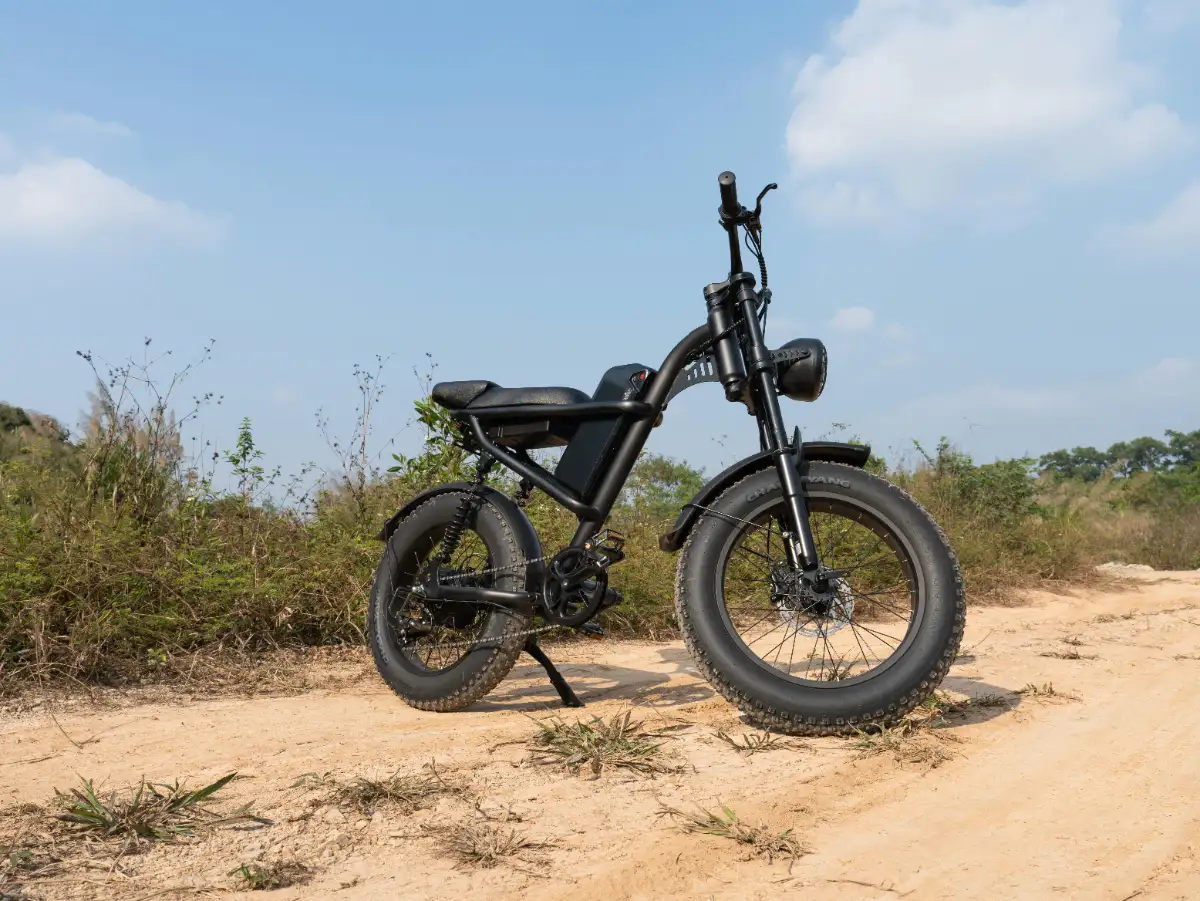
An electric mountain bike (eMTB) is a traditional mountain bike equipped with a motor and battery that assist your pedaling. Unlike throttle-powered electric bikes, most eMTBs use pedal assist, meaning the motor only engages when you pedal.
At the core of every electric mountain bike are three key components:
Motor
The motor provides additional power to your pedaling. Most modern eMTBs use a mid-drive motor, positioned near the crankset. This placement improves balance, climbing efficiency, and handling on technical terrain.
Motor output is typically measured in:
- Watts (W) – overall power output
- Torque (Nm) – how much pulling force the motor provides
Torque matters most for steep climbs and technical terrain. Most quality eMTBs range between 60Nm and 90Nm of torque.
Battery
The battery stores energy for the motor. Capacity is measured in watt-hours (Wh). A larger battery means more range but adds weight.
Common battery sizes:
- 500Wh (lighter, moderate range)
- 625–750Wh (long trail days)
- 800Wh+ (extended backcountry riding)
Controller & Assist Modes
You can adjust how much support the motor provides. Most systems offer multiple assist modes — from eco (minimal boost) to turbo (maximum power).
An electric mountain bike doesn’t replace pedaling. It amplifies your effort. You still ride, shift, brake, and navigate terrain just like a traditional mountain bike — but with more capability on climbs and longer trail days.
Now that you understand how an eMTB works, the next step is deciding what type of riding you actually plan to do.
Define Your Riding Style and Terrain
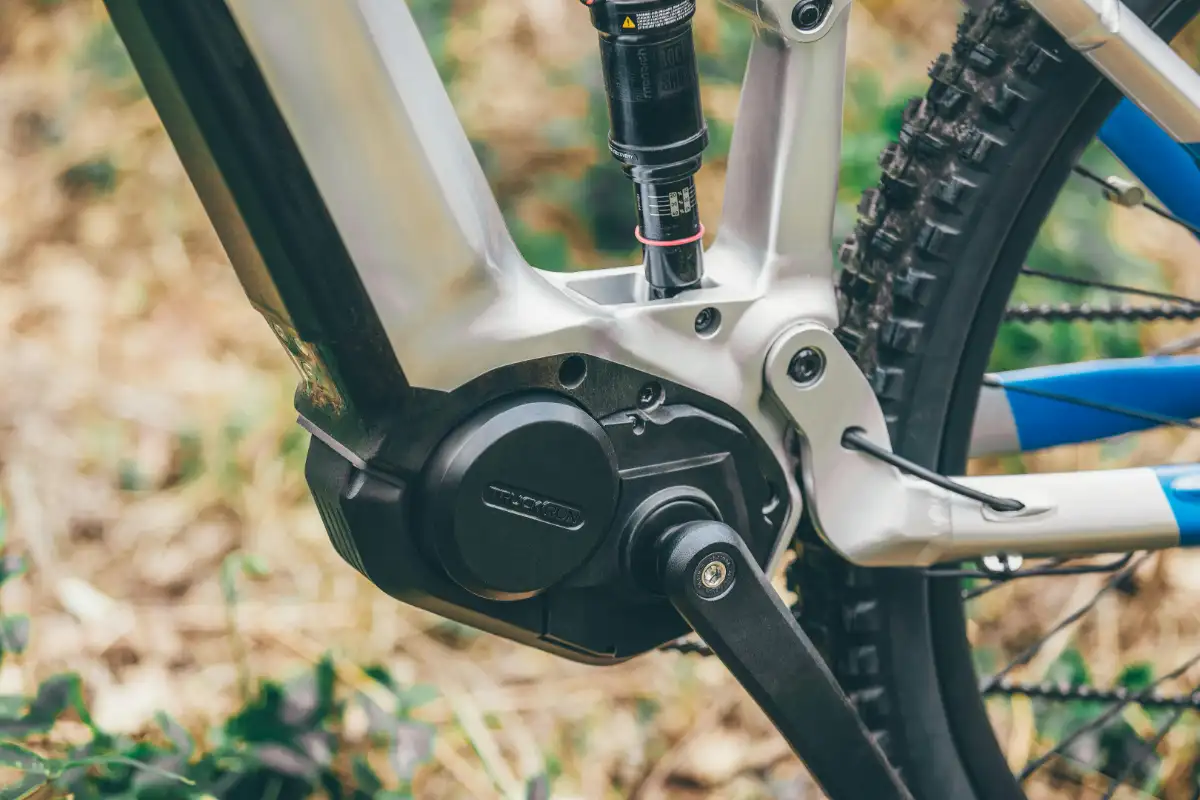
Before comparing torque numbers or battery sizes, you need to define how you’ll use the bike. This single step determines nearly every other choice.
Ask yourself:
- Do I ride mostly smooth trails or rocky technical terrain?
- Am I climbing long fire roads or steep singletrack?
- Do I prioritize speed, comfort, or aggressive descending?
Your riding style generally falls into one of these categories:
Trail Riding
Balanced climbing and descending on mixed terrain.
Recommended:
- 120–150mm suspension travel
- 60–85Nm torque
- 500–700Wh battery
Trail eMTBs are the most versatile and best for most riders.
All-Mountain / Enduro
Steeper climbs and aggressive descents.
Recommended:
- 150–170mm suspension travel
- 85Nm+ torque
- 625–750Wh battery
These bikes are heavier but more capable on technical terrain.
Beginner / Recreational Riding
Mostly fire roads, light trails, and moderate climbs.
Recommended:
- Hardtail or light full suspension
- 60–75Nm torque
- 500–625Wh battery
You don’t need maximum power if terrain is moderate.
Choosing the wrong category often leads to overspending or underperformance. Many riders buy more suspension and torque than they actually need.
Once you define your terrain and riding intensity, choosing the right motor becomes much easier.
Choosing the Right Motor (Torque & Power Explained)
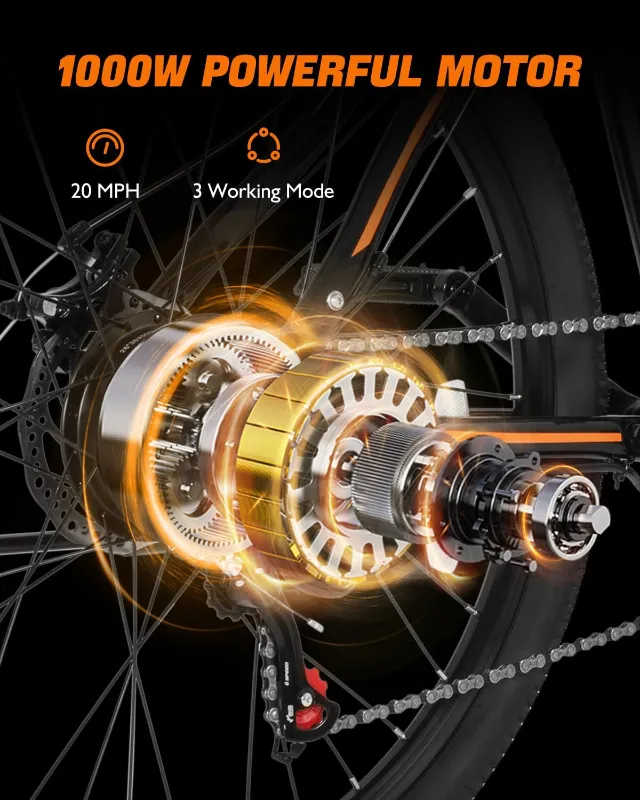
The motor is the heart of an electric mountain bike. It determines how the bike climbs, how it responds to pedaling, and how natural the ride feels.
There are two main motor types:
Mid-Drive Motors (Recommended)
Mounted at the crankset, mid-drive motors deliver power through the drivetrain. This keeps weight centered and improves handling.
Benefits:
- Better climbing efficiency
- Balanced weight distribution
- More natural ride feel
- Better torque delivery
Most high-quality eMTBs use mid-drive systems from brands like Bosch, Shimano, Yamaha, or Brose.
Hub Motors
Mounted in the rear wheel hub.
Less common on serious mountain bikes.
Drawbacks:
- Poor weight distribution
- Less efficient on steep climbs
- Reduced technical trail performance
For off-road riding, mid-drive is almost always the better choice.
Understanding Torque (Nm)
Torque determines how powerful the motor feels when climbing.
General guidelines:
- 60–70Nm → Light trail riding
- 70–85Nm → Versatile trail performance
- 85–90Nm+ → Steep, aggressive climbing
More torque helps on steep terrain but increases weight and battery consumption.
Watts vs Real-World Performance
Many regions limit motors to 250W nominal output. Don’t focus only on watts — torque and motor tuning matter more for trail performance.
Smooth power delivery is often more important than raw numbers.
Choosing the right motor is about matching power to terrain. Once you understand torque needs, the next major factor is battery size and real-world range.
Battery Size and Real-World Range
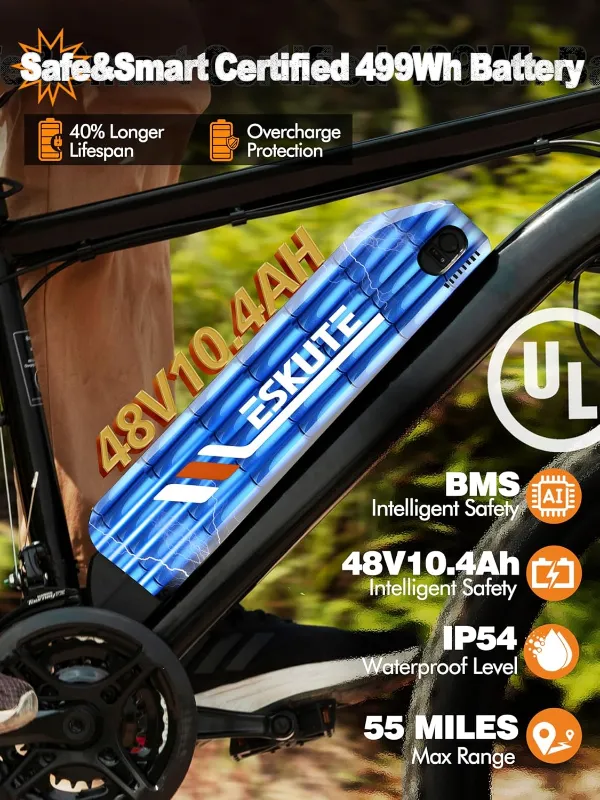
After choosing the right motor, the next critical decision is battery capacity. Battery size determines how far your electric mountain bike can go — but real-world range depends on more than just numbers.
Battery capacity is measured in watt-hours (Wh). The higher the Wh rating, the more energy the battery can store.
Common eMTB Battery Sizes
- 400–500Wh → Lighter weight, shorter rides
- 625–750Wh → Balanced performance and range
- 800Wh+ → Extended backcountry or long climbing days
For most trail riders, a 625–750Wh battery offers the best balance between range and weight.
How Far Can an Electric Mountain Bike Go?
Real-world range depends on:
- Rider weight
- Terrain steepness
- Assist level used
- Wind conditions
- Tire pressure and rolling resistance
Here’s a realistic expectation range:
| Battery Size | Eco Mode | Trail Mode | Turbo Mode |
|---|---|---|---|
| 500Wh | 35–50 miles | 25–35 miles | 15–25 miles |
| 625Wh | 45–60 miles | 30–45 miles | 20–30 miles |
| 750Wh | 55–70 miles | 40–55 miles | 25–35 miles |
These are averages — aggressive climbing in Turbo will drain any battery quickly
Removable vs Integrated Batteries
Most modern electric mountain bikes feature integrated batteries inside the downtube. Some are removable for easier charging.
Removable batteries are convenient if:
- You store your bike in a garage without outlets
- You want to bring a spare battery
Integrated systems often look cleaner and improve frame stiffness.
The Right Strategy
Avoid buying the biggest battery “just in case.” Larger batteries add weight and affect handling.
Choose battery size based on:
- Typical ride duration
- Elevation gain
- Assist level preference
If you frequently ride long, steep terrain, prioritize capacity. If you ride moderate trails under 2 hours, 500–625Wh may be more than enough.
Now that power and range are covered, let’s look at the physical platform of the bike itself.
Hardtail vs Full Suspension
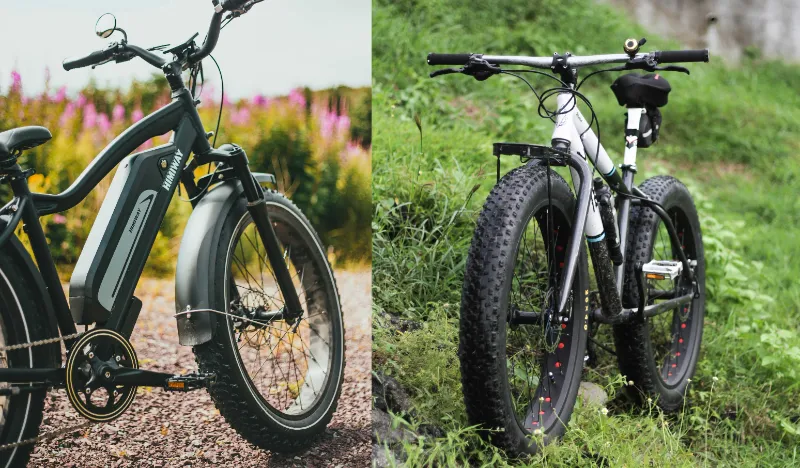
One of the biggest decisions when choosing an electric mountain bike is whether to go with a hardtail or a full suspension design.
The difference affects comfort, control, weight, and price.
Hardtail Electric Mountain Bikes
A hardtail has front suspension only.
Best for:
- Smooth trails
- Fire roads
- Light cross-country terrain
- Budget-conscious riders
Pros:
- Lower cost
- Lighter weight
- Simpler maintenance
- Efficient climbing
Efficient climbing
- Less comfort on rough terrain
- Reduced traction on technical descents
Hardtail eMTBs are often ideal for beginners or riders who don’t tackle aggressive terrain.
Full Suspension Electric Mountain Bikes
Full suspension bikes have both front and rear suspension.
Best for:
- Rocky trails
- Root-heavy terrain
- Steep descents
- Technical riding
Pros:
- Better traction
- More comfort
- Increased control
- Confidence at higher speeds
Cons:
- Higher cost
- More maintenance
- Slightly heavier
Because electric mountain bikes already weigh more than traditional bikes, full suspension helps maintain control and stability on rough terrain.
For most riders exploring true trail systems, full suspension is worth the investment. However, if terrain is moderate, a hardtail may offer better value.
The next step is understanding how much suspension travel you actually need.
Suspension Travel and Geometry
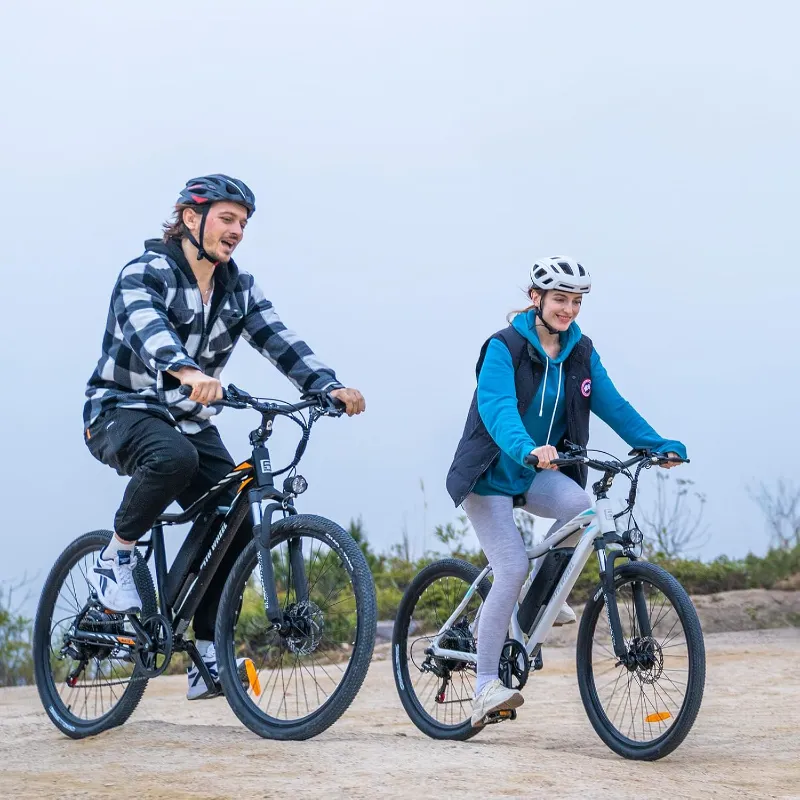
Suspension travel refers to how much movement your front and rear suspension can absorb. It’s measured in millimeters (mm).
Choosing the right amount of travel depends entirely on terrain and riding intensity.
Recommended Suspension Travel by Riding Style
- 120–130mm → Light trail, cross-country
- 140–150mm → Balanced trail riding
- 160–170mm → Aggressive all-mountain / enduro
More travel improves descending confidence and rough-terrain comfort — but adds weight and slightly reduces pedaling efficiency.
Why Geometry Matters
Modern electric mountain bikes use progressive geometry to improve stability.
Look for:
- Slacker head tube angle (more stable at speed)
- Longer reach (better control descending)
- Lower bottom bracket (improved balance)
Because eMTBs are heavier, geometry plays an even larger role in handling compared to traditional bikes.
A bike designed for aggressive terrain will feel planted and stable. A cross-country-focused eMTB will feel more responsive and efficient.
Matching suspension travel and geometry to your riding style prevents overbuying — and ensures the bike feels natural on your local trails.
Choosing the Right Frame Material
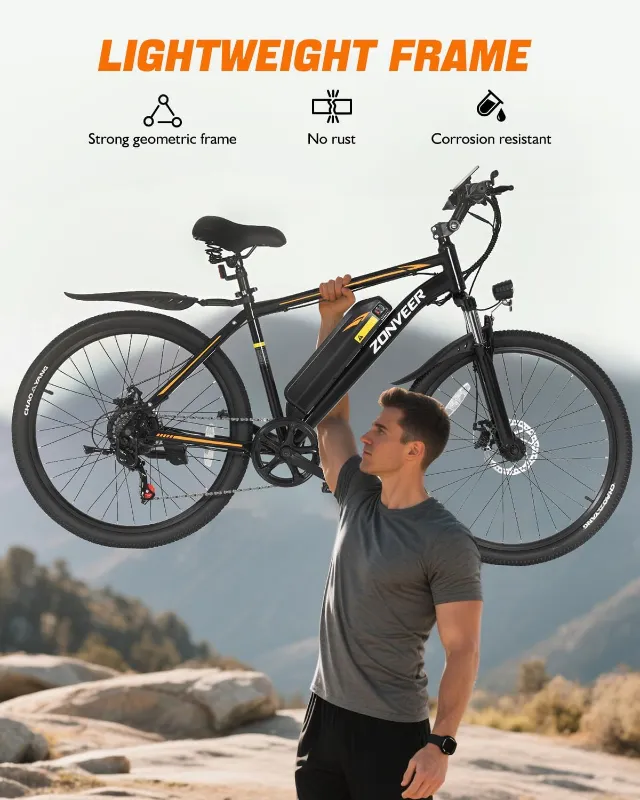
Frame Materials: Aluminum vs Carbon
The frame is the foundation of your electric mountain bike. It affects weight, ride feel, durability, and price.
Most electric mountain bikes use either aluminum or carbon fiber frames.
Aluminum Frames
Aluminum is the most common frame material in the eMTB market.
Best for:
- Entry-level to mid-range budgets
- Riders prioritizing durability
- Trail and all-mountain riding
Pros:
- More affordable
- Durable and impact-resistant
- Excellent value for performance
Cons:
- Slightly heavier than carbon
- Less vibration damping
Because electric mountain bikes already weigh more than traditional bikes due to the motor and battery, the weight difference between aluminum and carbon is often less noticeable than on regular mountain bikes.
For most riders, a well-designed aluminum frame offers outstanding performance and value.
Carbon Fiber Frames
Carbon frames are typically found on higher-end electric mountain bikes.
Pros:
- Lighter overall weight
- Better vibration absorption
- Premium ride feel
Cons:
- Higher cost
- More expensive to repair
Carbon makes the most sense if you:
- Ride aggressively
- Prioritize performance
- Want the lightest possible setup
For many riders, investing in better suspension or motor quality often provides more benefit than upgrading from aluminum to carbon.
How Much Should You Spend?
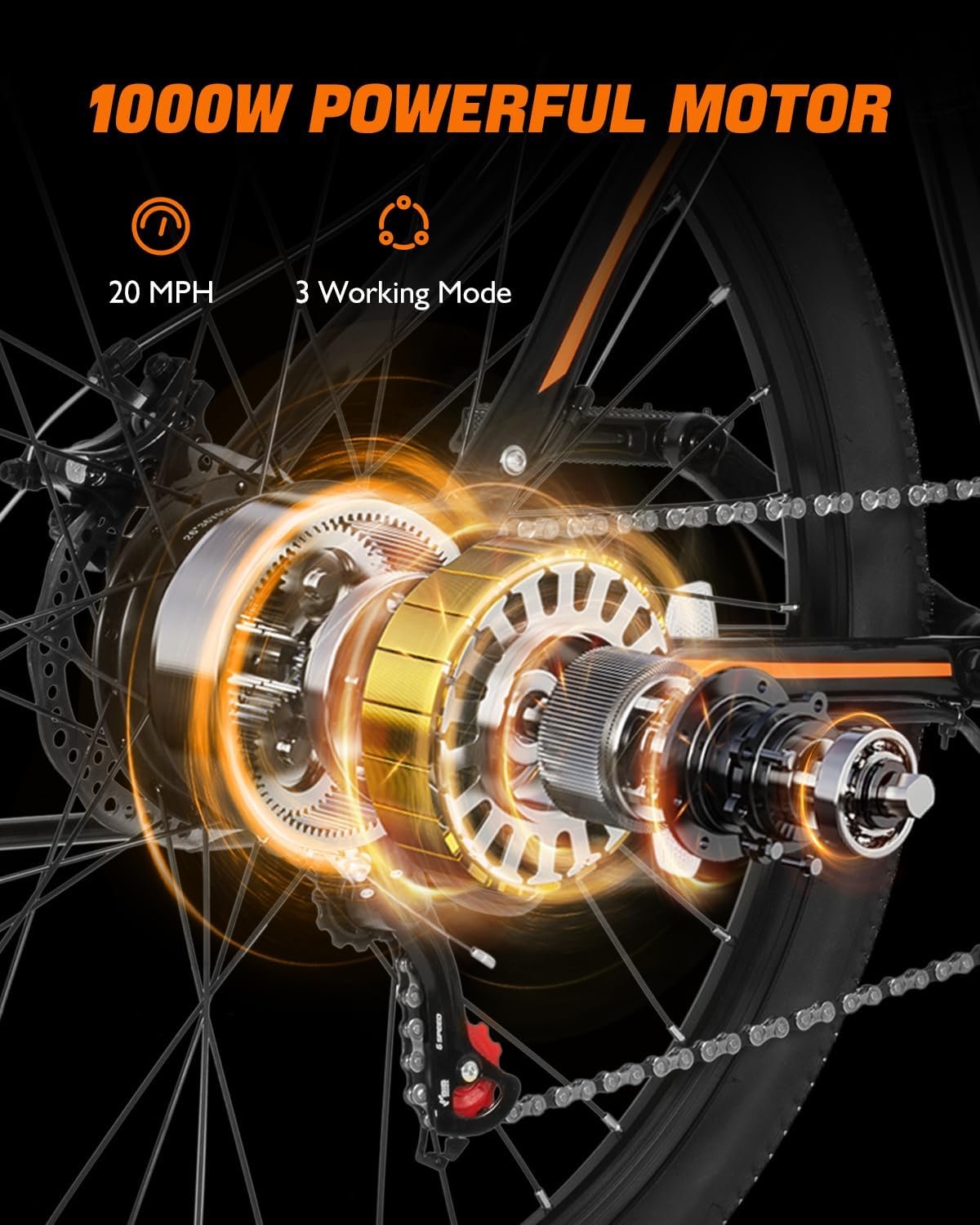
Frame Materials: Aluminum vs Carbon
Electric mountain bikes vary significantly in price. Understanding what you get at each budget level prevents overspending — or buying something underpowered.
Here’s a realistic breakdown:
$1,500 – $2,500 (Entry Level)
What to expect:
- Hardtail frame
- 60–75Nm motor
- 500Wh battery
- Basic suspension components
Best for:
- Beginners
- Light trail riding
- Recreational use
These bikes are capable but may lack advanced suspension tuning and premium motor systems.
$2,500 – $4,500 (Mid-Range Sweet Spot)
What to expect:
- Hardtail or entry-level full suspension
- 70–85Nm motor
- 625–750Wh battery
- Better braking and drivetrain components
Best for:
- Serious trail riders
- Balanced climbing and descending
For most riders, this price range offers the best performance-to-value ratio.
$4,500 – $7,000+ (High-End Performance)
What to expect:
- Full suspension
- 85–90Nm premium motor systems
- 750Wh+ battery
- Advanced suspension (Fox, RockShox performance lines)
- Carbon frame options
Best for:
- Aggressive all-mountain or enduro riding
- Riders who want maximum capability
Higher price usually means:
- Better suspension quality
- More refined motor tuning
- Improved durability under heavy use
Before choosing your budget, define your riding style first. Then match price to performance needs — not marketing claims.
If you want to see real-world options within each price range, you can explore our detailed mountain eBike reviews and side-by-side comparisons.
If you made your mind for a budget ebike, please visit our curated collection of affordable electric mountain bikes;
Electric Mountain Bike Sizing Guide
Choosing the correct size electric mountain bike is critical for comfort, control, and safety.
Because eMTBs are heavier than traditional bikes, proper fit becomes even more important for handling confidence.
Start With Manufacturer Size Charts
Every brand provides a recommended size range based on rider height. Always check the brand’s specific sizing guide, as geometry varies between manufacturers.
General height guidelines:
- 5'2" – 5'6" → Small
- 5'6" – 5'10" → Medium
- 5'10" – 6'1" → Large
- 6'1"+ → XL
These are starting points — not absolute rules.
Reach and Geometry Matter
Modern electric mountain bikes often use longer reach measurements and slacker head angles.
If you:
- Prefer stability at speed → Consider slightly longer reach
- Prefer agility and maneuverability → Consider slightly shorter reach
Test riding is ideal. If that’s not possible, compare geometry charts between models.
Why Fit Is Even More Important on an eMTB
Electric mountain bikes typically weigh between 45–60+ pounds. A bike that is too large or too small can feel unstable and difficult to control — especially on technical terrain.
Proper sizing improves:
- Climbing efficiency
- Descending confidence
- Overall comfort on long rides
When in doubt, consult a local bike shop or contact the manufacturer directly before purchasing.
Electric Mountain Bike Buying Checklist
Before making your final decision, run through this quick checklist to ensure you’ve matched the bike to your real riding needs.
Riding Style
- I’ve clearly defined my terrain (trail, enduro, recreational)
- I’m not buying more suspension or torque than I need
Motor
- Mid-drive motor preferred
- Torque range matches my terrain (60–90Nm)
- Power delivery feels smooth and natural
Battery
- Battery size supports my typical ride duration
- I understand real-world range vs assist mode
- Removable battery if needed
Suspension
- Travel range matches riding intensity
- Full suspension if riding technical terrain
- Hardtail only if terrain is moderate
Frame & Budget
- Frame material fits my budget priorities
- I’m investing in performance, not marketing features
- Price aligns with actual riding needs
Fit & Sizing
- Size matches manufacturer chart
- Geometry suits my riding style
- Reach and handling feel comfortable
If you can confidently check these boxes, you’re ready to choose the right electric mountain bike for your riding goals.
If you’re still comparing options, explore our detailed mountain eBike reviews and side-by-side comparisons to narrow your final decision.
Frequently Asked Questions
What is the best motor torque for an electric mountain bike?
For most riders, 70–85Nm offers the best balance between climbing power and efficiency.
Riders tackling steep, technical terrain may prefer 85Nm or more, while recreational riders may find 60–70Nm sufficient.
How far can an electric mountain bike go on one charge?
Range depends on battery size, terrain, assist level, and rider weight. A 625Wh battery typically delivers 30–45 miles in mixed trail riding, while aggressive Turbo mode reduces range significantly.
Is full suspension worth it on an electric mountain bike?
For rocky or technical trails, full suspension improves traction, comfort, and control. If riding mostly smooth trails or fire roads, a hardtail may be sufficient and more affordable.
Are electric mountain bikes harder to maintain?
Maintenance is similar to traditional mountain bikes, but components may wear faster due to added weight and torque.
Keeping the drivetrain clean and regularly checking brakes and suspension is important.
What size electric mountain bike should I get?
Follow the manufacturer’s sizing chart based on your height, then compare reach and geometry.
Because eMTBs are heavier, proper sizing is especially important for control and comfort.
How much should I spend on a good electric mountain bike?
Most riders find the best value between $2,500 and $4,500.
Entry-level bikes work for beginners, while high-end models offer premium suspension and motor systems for aggressive riders.
Final Thoughts
Choosing the right electric mountain bike isn’t about chasing the highest numbers. It’s about matching motor power, battery range, suspension setup, and geometry to your terrain and riding style.
Define your needs first. Then select features that support how you actually ride.
If you’re ready to explore specific models, browse our mountain eBike reviews or compare top-rated options side-by-side to find the best fit.