
Best Entry Level Electric Mountain Bike — Beginner's Guide to Buying Right (2026)
Searching for the best entry level electric mountain bike? You’ve come to exactly the right place — and you’re making one of the smartest decisions a new rider can make. Starting with the right entry-level eMTB builds real confidence, teaches you proper riding technique, and saves you from the expensive mistake of buying the wrong bike first.
Here’s the truth most guides won’t tell you: entry level doesn’t mean cheapest. It means the right starting point. A bike that’s too powerful will feel aggressive and hard to control. A bike that’s too cheap will disappoint you within weeks. The best entry level electric mountain bike sits in the sweet spot — smooth power, confident handling, honest range, and a price that makes sense.
At TheBikeYear, we specialise in electric mountain bikes and trail-ready eMTBs. Every bike in this guide is Amazon-available, under $1,000, and selected specifically for beginner riders who want to build skills and confidence on trails — not fight their bike to do it.
Already exploring budget options? Check our full roundup: Best Electric Bikes Under $1,000 — it covers the widest range of budget e-bikes across all riding styles.
Our Top Picks — Best Entry Level Electric Mountain Bikes at a Glance
Short on time? These are our five beginner-friendly picks. Each is reviewed in full below.
Quick Comparison — Best Entry Level Electric Mountain Bikes 2026
Compare all five bikes side by side on the specs that actually matter for new riders:
| # | Model | Motor | Battery | Range | Top Speed | Amazon Price |
|---|---|---|---|---|---|---|
| #1 | PUCKIPUPPY 26" Fat Tire eMTB
⭐ Best Overall Beginner
| 1350W | 48V Li-Ion | 40–80 mi | 28 MPH | Check Price |
| #2 | ANCHEER 26"
💰 Best Budget
| 500W/750W | 48V Li-Ion | 30–50 mi | 22 MPH | Check Price |
| #3 | Funhang 500W/1000W
🏕️ Best Light Trail
| 1000W Peak | 48V Li-Ion | 60 mi | 25 MPH | Check Price |
Affiliate Disclosure: As an Amazon Associate, TheBikeYear earns from qualifying purchases at no extra cost to you. Prices and availability may vary.
For a detailed list of the Best Entry Level Electric Mountain Bike, Please visit our post Best Electric Bikes Under $1,000 — it covers the 7 best electric mountain bikes tested and trusted by thousands of users.
What Is an Entry Level Electric Mountain Bike — and Why It Matters
Most buyers make one of two mistakes when buying their first eMTB: they buy the cheapest thing available or they buy more power than they can handle. Both lead to frustration. An entry level electric mountain bike avoids both traps by prioritising the three things every new rider actually needs: control, comfort, and confidence.
The phrase “entry level” refers to how the bike is designed — not just its price. A genuinely entry-level eMTB delivers smooth, predictable motor engagement. The power builds gradually when you start pedalling, responds proportionally to your input, and doesn’t surprise you. This is what builds trail confidence quickly.
The Two Mistakes Beginners Make
Mistake 1 — Too much power: A 750W or 1000W motor sounds impressive. But on a first ride, aggressive motor delivery is destabilising. It can throw your weight backwards on climbs and make low-speed manoeuvring feel twitchy. For beginners, 500W with smooth cadence sensing is almost always the better experience.
Mistake 2 — Too cheap: Bikes priced under $600 often use unbranded motors, poorly calibrated battery management systems, and frames with questionable welds. They feel unstable, lose range quickly, and frequently require repair within months. This isn’t saving money — it’s spending twice.
The bikes in this guide all sit in the $700–$1,000 range — the proven sweet spot where build quality, motor reliability, and beginner-friendly design converge. For a broader price comparison, see our best electric bikes under $1,000 guide.
What Entry Level eMTB Terrain Looks Like
To set expectations clearly: the bikes in this guide are designed for these trail types:
- Gravel paths and fire roads
- Forest tracks and packed dirt trails
- Park trails and recreational paths
- Moderate hill climbs with motor assistance
- Mixed terrain commuting and weekend rides
They are not designed for technical singletrack, aggressive descents, or enduro riding. For those, you’d need a dedicated eMTB — see our best mountain eBike guide and hardtail electric mountain bike comparison for more capable options.
The Beginner Safety Score — How We Evaluate Entry Level eMTBs
Most reviews focus on top speed and claimed range. But beginners don’t need more speed. They need more control. Here’s the framework we used to evaluate every bike in this guide — we call it the Beginner Safety Score.
| Factor | What to Look For | Why It Matters for Beginners |
|---|---|---|
| ⚖️ Power Balance | 350W–500W continuous, not 1000W peak-only | Enough for hills without losing control |
| 🔧 Maintenance | Rear hub motor, minimal pivot points | Less to go wrong while you're still learning |
| 🖥️ Ease of Use | Clear LCD display, simple mode switching | Reduces cognitive load — you ride, not fidget |
| ⚡ Motor Control | Smooth, gradual engagement (not sudden) | Prevents jerky starts that throw off balance |
| 💪 Stability | Fat tyres or 2.4"+ width, low centre of gravity | More grip and confidence on uneven terrain |
Every bike recommended in this guide meets all five criteria. Any bike that failed on motor control or stability was excluded, regardless of specs or price.
3 Best Entry Level Electric Mountain Bikes — Full Reviews
Each review below covers what the bike actually feels like for a new rider — not just the spec sheet. We focused on control, confidence, and real-world suitability for beginners.
1. PUCKIPUPPY 26" Fat Tire Electric Mountain Bike — ⭐ Best Overall Entry Level eMTB
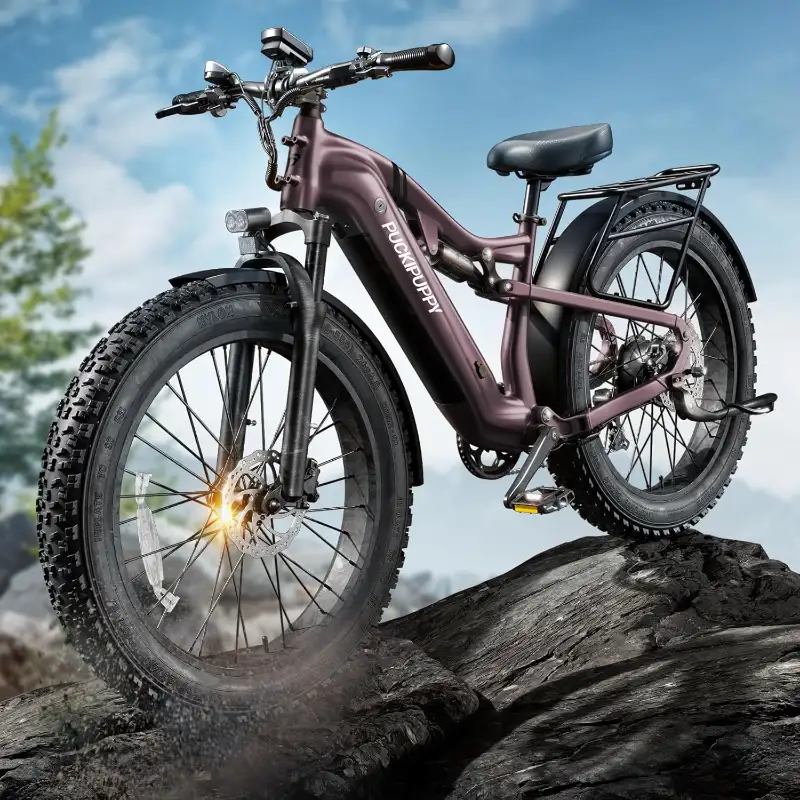
The PUCKIPUPPY 26″ Fat Tire Electric Mountain Bike is our top recommendation for the best entry level electric mountain bike for one defining reason: its fat tyre design removes the single biggest challenge for new riders — instability. When your tyres are wider, your contact patch is bigger, your grip is stronger, and your confidence on uneven ground grows naturally.
PUCKIPUPPY is one of the most established names in the Amazon budget eMTB market with thousands of verified reviews, making it one of the lowest-risk first purchases available.
Why It's Perfect for Beginners
The 1350W rear hub motor delivers smooth, consistent power that engages predictably. There are no sudden surges — just steady, manageable assistance that builds from your pedalling input. New riders report feeling in control from their very first ride, which is exactly what matters.
The 26″ × 4.0″ fat tyres are the headline feature. They absorb small trail irregularities naturally, reduce the impact of loose surfaces, and provide stability on gravel and packed dirt that standard-width tyres simply can’t match. For beginners nervous about rough terrain, these tyres act as a natural confidence builder.
Battery & Range
The 48V removable lithium battery delivers a real-world range of 40 to 80 miles per charge. While 48V is less powerful than 48V systems, it’s efficient and predictable — well-suited to the shorter, exploratory rides most beginners take initially. The removable design keeps charging practical.
Key Features
- 1350W rear hub motor — smooth and beginner-friendly
- 26" × 4.0" fat tyres — maximum stability for new riders
- Removable 48V lithium battery
- 40–80 mile real-world range
- Front suspension fork
- Shimano 8-speed drivetrain
- Front and rear disc brakes
✅ PROS
- Fat tyres = best stability for beginners on this list
- Thousands of verified Amazon reviews
- Smooth motor engagement — not intimidating
- Handles gravel, sand, packed dirt confidently
❌ CONS
- Heavier than standard-tyre models — harder to lift
Best For
First-time eMTB riders who want maximum stability, proven reliability, and a genuinely confidence-building first trail experience.
🛒 Buy on Amazon: Check Price & Availability — PUCKIPUPPY 26″ Fat Tire Electric Mountain Bike → (Amazon Affiliate Link)
2. ANCHEER 26" Electric Mountain Bike — 💰 Best Budget Entry Level Electric Mountain Bike
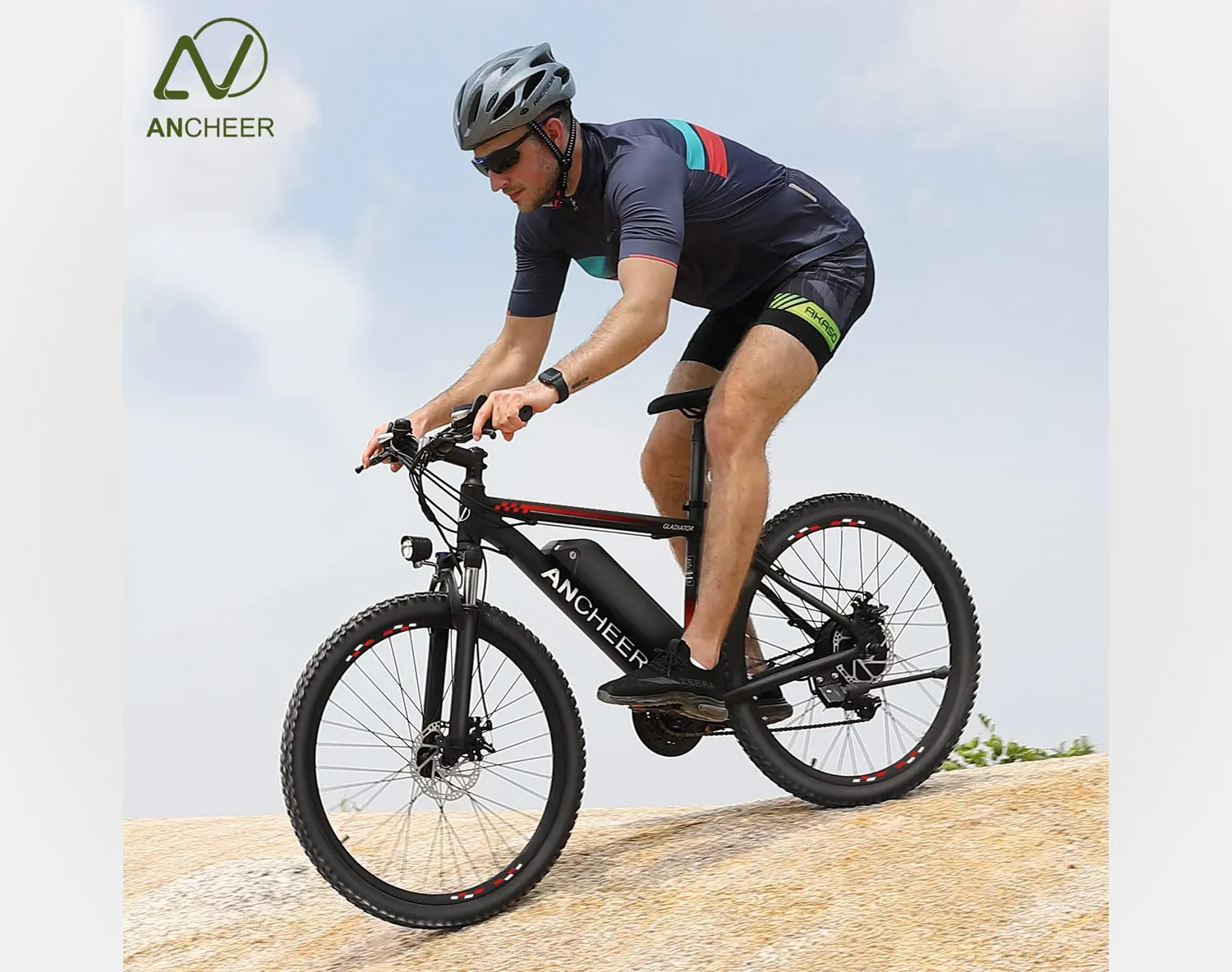
If your primary concern is keeping costs as low as possible while still getting a genuinely rideable entry level electric mountain bike, the ANCHEER 26″ has been the default recommendation for budget beginners for years — and for good reason. ANCHEER is one of the highest-selling eMTB brands on Amazon, which means a large support community, spare parts availability, and reliable customer feedback.
Motor & Control
The 500W motor (750W peak) provides smooth, predictable pedal assist that beginners find easy to manage. The three riding modes — electric only, pedal assist, and standard cycling — give new riders the flexibility to learn gradually, starting with standard cycling and introducing more motor assistance as confidence grows.
21-Speed Gearing — A Genuine Beginner Advantage
The 21-speed Shimano-compatible gear system is a meaningful advantage for beginners on varied terrain. Being able to drop into a low gear before a hill — before engaging pedal assist — makes climbs dramatically easier and teaches proper riding technique that carries forward to future, more capable bikes.
Battery & Range
The removable 48V lithium battery delivers 30 to 50 miles of real-world range — the 48V advantage shows here, with better sustained power delivery than 36V budget alternatives.
Key Features
- 500W motor (750W peak)
- Removable 48V lithium battery — 30–50 mile range
- 21-speed Shimano-compatible gearing
- Three riding modes
- Front suspension fork
- Disc brakes front and rear
✅ PROS
- Lowest price on this list
- 21-speed gearing teaches proper trail technique
- 48V battery — better range than 36V alternatives
- Huge user community — easy to find support
❌ CONS
- Motor slightly less refined than premium options
- Basic suspension — not for rough technical terrain
Best For
Budget-conscious first-time buyers who want a dependable entry-level eMTB without overspending on their first bike.
🛒 Buy on Amazon: Check Price & Availability — ANCHEER 26″ Electric Mountain Bike → (Amazon Affiliate Link)
Searching for budget electric mountain bikes? Here is the crafted list of our new budget electric mountain bikes.
3. Funhang 26" Electric Mountain Bike — 🏕️ Best Entry Level eMTB for Light Trails
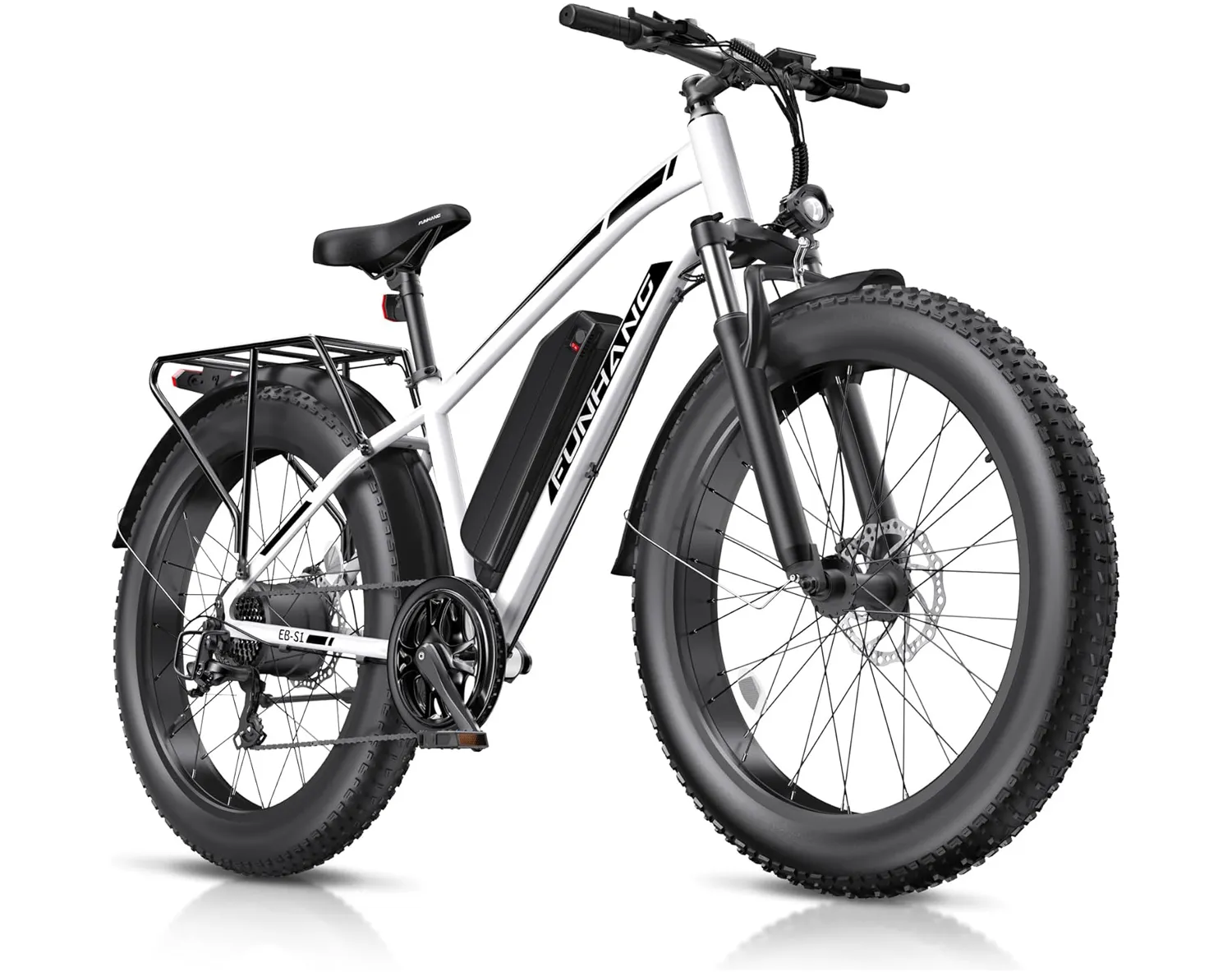
The Funhang 26″ Electric Mountain Bike is the right pick for beginners who already know they want to spend more time on actual trails than on pavement. It steps up the motor power slightly compared to pure commuter-focused options, giving it noticeably better climbing ability for riders who want to explore forest tracks and gravel paths from day one.
Motor & Trail Performance
The 500W brushless motor (1000W peak) gives the Funhang a meaningful advantage on moderate climbs and switchbacks. While beginners should start in lower assist levels to build technique, the extra peak power provides a genuine safety margin when gradients increase unexpectedly on trail rides.
21-Speed Gearing + Motor Combo
The combination of a 21-speed drivetrain and pedal assist is the Funhang’s most practical trail feature. Dropping to a lower gear before engaging higher assist levels on climbs teaches the riding habit that transitions naturally to more advanced eMTBs later.
Battery & Range
The removable 48V battery supports 30 to 50 miles of riding depending on terrain and assist level — sufficient for most trail sessions and mixed rides.
Key Features
- 500W motor (1000W peak) — extra climbing power
- Removable 48V lithium battery — 30–50 miles
- 21-speed drivetrain
- 26" MTB tyres with front suspension fork
- Disc brakes front and rear
- Multiple riding modes
✅ PROS
- More trail power than pure commuter bikes
- 21-speed gearing teaches proper riding technique
- 48V battery with solid real-world range
- Good disc brakes for trail safety
❌ CONS
- Heavier than 500W-only alternatives
- Entry-level components — not for aggressive riding
Best For
Beginners who want to spend more time on light trails and gravel paths from the start, with enough motor power to handle moderate climbs confidently.
🛒 Buy on Amazon: Check Price & Availability — Funhang 26″ Electric Mountain Bike → (Amazon Affiliate Link)
Entry Level vs Cheap Electric Mountain Bikes — What's the Real Difference?
This is the most important distinction this guide can make. Entry level and cheap are not the same thing, and confusing them is the most common — and most expensive — mistake first-time eMTB buyers make.
| Feature | Cheap Budget Bike | Entry-Level eMTB |
|---|---|---|
| Price Focus | Lowest possible cost | Best value for money |
| Motor Quality | Often unbranded, unreliable | Consistent, reliable hub motor |
| Battery | Low capacity, fast drain | 48V system, adequate range |
| Ride Control | Unpredictable, jerky | Smooth, gradual assist |
| Frame Build | Heavy steel, poor welds | Aluminium alloy, solid construction |
| Brakes | Basic rim brakes | Mechanical disc brakes minimum |
| Long-Term Value | High replacement cost | Rides well for 2–4 years |
| Best For | One-off occasional use | Regular riders building skills |
Bottom line:
A cheap electric mountain bike prioritises the lowest price above everything else. An entry-level electric mountain bike prioritises the right balance of performance, reliability, and value for a new rider. The difference often comes down to $100–$200 — but the riding experience difference is enormous.
All five bikes on this list are entry-level by design, not just by price. They were selected because they perform well for beginners, not because they’re the cheapest option available.
Who Should Buy an Entry Level Electric Mountain Bike?
Not every rider needs a high-powered, premium eMTB. Entry-level electric mountain bikes are genuinely the right choice for a specific group of riders. Here’s how to know if you’re one of them.
✅ You're the Right Buyer If...
- This is your first electric mountain bike and you want to build skills gradually
- You ride a mix of light trails, gravel paths, and occasional pavement
- Your budget is $700–$1,000 and you want the best bike within that range
- You want a low-maintenance bike that works reliably without complex setups
- You commute during the week and want trail riding capability on weekends
- You’re returning to cycling after a break and want gentle motor assistance
❌ You Might Need Something Different If...
- You want to ride technical singletrack, rock gardens, or aggressive descents
- You’re an experienced mountain biker who wants to maintain high trail speed
- You’re willing to spend $1,500+ for significantly better suspension and components
- You ride primarily on steep, sustained hill climbs every session
For riders who’ve outgrown entry-level options, our best hardtail electric mountain bike guide and best mountain eBike picks cover more capable options at higher price points.
How to Choose the Best Entry Level Electric Mountain Bike — 6 Key Factors
1. Motor Power: 250W vs 350W vs 500W for Beginners
250W is sufficient for flat terrain and very light trail use. 350W adds meaningful hill-climbing ability without being overwhelming. 500W is the sweet spot for most entry-level trail riders — enough power for varied terrain without feeling too aggressive. All five bikes on this list use 500W motors, which is the right starting point for most new eMTB riders.
For a deeper dive into how motor power affects real trail performance, our guide on electric mountain bike motor and battery performance explains the real-world differences.
2. Battery Voltage: 36V vs 48V
36V systems are efficient and smooth — good for casual riding and lighter use. 48V systems deliver faster motor response, better sustained hill performance, and typically longer range. Where two bikes seem equal, the 48V option is almost always the better long-term choice.
3. Hardtail vs Full Suspension Under $1,000
Always choose hardtail under $1,000. Full suspension bikes in this price range use low-quality rear shocks that wear quickly, add unnecessary weight, and perform worse than a quality hardtail fork. Every bike on this list is hardtail — which is the correct design for beginner trail riding and budget eMTBs.
For a full breakdown of this decision: Hardtail vs Full Suspension Electric Mountain Bike.
4. Tyre Width and Stability
Wider tyres mean more stability, more grip, and more confidence for new riders. Fat tyres (3.8–4.0″) are the most forgiving for beginners. Standard MTB tyres (2.1–2.4″) are lighter and faster but less forgiving on loose surfaces. Match your tyre choice to your terrain.
5. Riding Modes and Controls
Look for at least three riding modes — electric only, pedal assist, and standard cycling. Multiple pedal assist levels (3–5 levels) are important for beginners to gradually introduce motor power as confidence grows. A clear LCD display showing battery level and current mode is non-negotiable for safety.
6. Real-World Range vs Rated Range
Manufacturer range figures are optimistic. Expect 20–30% less in real-world conditions — more on hilly terrain or with heavier riders. A bike rated at 50 miles will typically deliver 35–40 miles in normal riding. Plan your rides accordingly, especially early on when you’re still learning battery management.
How Entry Level Electric Mountain Bikes Perform in Real Riding Scenarios
Specs tell you what a bike can do. Scenarios tell you how it actually feels. Here’s what beginners typically experience across three common riding situations.
Scenario 1 — Your First Trail Ride
You start on a flat section to test the pedal assist. The motor engages smoothly as you begin pedalling — there’s no jolt. You try each pedal assist level, noticing how the bike feels progressively more supported.
On a moderate climb, you drop to a lower gear and increase assist. The bike climbs confidently without requiring significant physical effort. You feel in control throughout. This is how it should feel on a well-chosen entry-level eMTB.
Scenario 2 — Weekly Commute + Weekend Trail
Monday morning: you ride 8 miles to work on urban roads in pedal assist level 2. Tuesday evening: you take a 12-mile gravel trail on the edge of town in level 3. The same bike handles both without modification.
Battery usage across both days: around 40%. This is the everyday reality of a good entry-level eMTB — versatile enough to justify owning one bike for multiple purposes.
Scenario 3 — Six Months In
After six months on an entry-level eMTB, most riders find themselves: riding longer distances, using lower assist levels (better battery management), handling rougher terrain with more confidence, and thinking about upgrading to a more capable bike. That’s the intended outcome. Entry-level eMTBs aren’t forever bikes — they’re the right first bike that teaches you what you actually want from your next one.
Frequently Asked Questions — Best Entry Level Electric Mountain Bike
What is the best entry level electric mountain bike for beginners in 2026?
The PUCKIPUPPY 26″ Fat Tire Electric Mountain Bike is our top overall pick for the best entry level electric mountain bike in 2026. Its fat tyre design delivers maximum stability for new riders, the 500W motor engages smoothly, and its large verified customer base on Amazon provides confidence in its long-term reliability.
How much should I spend on my first electric mountain bike?
The $700–$1,000 range is the proven sweet spot for entry-level eMTBs. Below $700, build quality and motor reliability decline noticeably. Above $1,000, you’re paying for features that beginners won’t use immediately. Spend within this range, choose carefully, and upgrade in 12–18 months once you understand your riding style.
Is a 500W motor enough for beginner trail riding?
Yes — 500W is the ideal motor power for beginners. It provides enough assistance for moderate hill climbs, trail riding, and daily commuting without feeling aggressive or difficult to control. All five bikes on this list use 500W motors for exactly this reason.
Should beginners choose hardtail or full suspension?
Hardtail, always, under $1,000. Full-suspension bikes in this price range use low-quality rear shocks that add weight and complexity without meaningful performance benefits. A quality hardtail with a good front fork is lighter, simpler, more reliable, and better value for beginners. Read our full breakdown: Hardtail vs Full Suspension eMTB Guide.
What's the difference between entry level and cheap electric mountain bikes?
Entry level means designed for the right balance of control, comfort, and reliability for new riders. Cheap means the lowest possible price, often at the cost of motor quality, frame integrity, and battery lifespan. The bikes on this list are entry level — not just cheap. The price difference is usually $100–$200, but the experience difference is significant.
How far can an entry level electric mountain bike go on one charge?
Expect 20–50 miles in real-world conditions depending on the bike, terrain, rider weight, and assist level. The Vivi delivers the strongest range on this list at up to 50 miles. The PUCKIPUPPY delivers 20–40 miles. All figures are weather-dependent and assume mixed terrain riding.
Can entry level electric mountain bikes handle hills?
Yes — all five bikes on this list handle moderate hill climbs effectively with motor assistance. For steep sustained climbs, drop into a low gear before the gradient increases and use a higher pedal assist level. The 48V models (ANCHEER, TotGuard, Funhang, Vivi) handle hills better than the 36V PUCKIPUPPY due to higher voltage power delivery.
How long does an entry level eMTB battery last?
Most lithium batteries in this price range last 2–4 years or 400–600 charge cycles with proper care. Avoid fully draining the battery, store it at room temperature, and charge to around 80% for regular use rather than 100% to extend lifespan.
Are electric mountain bikes legal on trails?
Most trail access rules in the US allow Class 1 electric bikes (pedal assist only, up to 20 MPH) on trails where regular mountain bikes are permitted. Class 2 bikes (with throttle) face more restrictions. Always check your local trail regulations before riding. Most bikes on this list are Class 2 — use throttle mode on roads, not trails.
When should I upgrade from an entry level eMTB?
Most riders are ready to upgrade after 12–18 months when they’ve developed consistent riding skills, know their preferred terrain, and find the entry-level bike limiting their performance. The experience you gain on an entry-level bike makes your upgrade decision far more informed and far more likely to result in the right second bike.
Final Verdict — Best Entry Level Electric Mountain Bike in 2026
The best entry level electric mountain bike for most beginners in 2026 is the PUCKIPUPPY 26″ Fat Tire Electric Mountain Bike. Its fat tyre stability, smooth 500W motor, proven reliability, and strong Amazon customer base make it the lowest-risk, highest-confidence first eMTB available under $1,000.
For riders prioritising budget, the ANCHEER 26″ delivers solid performance at the lowest price on the list. For the most balanced all-round option, the TotGuard is the right call. Trail-focused beginners should choose the Funhang for its extra climbing power. And for maximum range on a first bike, the Vivi leads the group.
Your first electric mountain bike doesn’t need to be perfect. It needs to be the right starting point — one that teaches you proper technique, builds real trail confidence, and shows you what kind of rider you’re becoming. All five bikes on this list do exactly that.
Ready to explore more options? Visit our best electric bikes under $1,000 guide for the widest selection of budget eMTBs, our hardtail electric mountain bike comparison for trail-focused picks, and our complete mountain eBike buying guide to understand every factor before upgrading.
Author Bio

Hossain
Hossain is the founder of The Bike Year and has spent 10 years researching electric mountain bikes through manufacturer specifications, verified owner reviews, expert forum discussions, and independent test data published by established eMTB communities.
Every recommendation on this site is built from deep research across multiple sources — not a single ride impression — so buyers get a complete, unbiased picture before spending their money.