
Hardtail vs Full Suspension Electric Mountain Bike: Which Is Better in 2026?
Choosing between a hardtail and full suspension electric mountain bike feels overwhelming.
Both bikes use powerful motors. Both promise serious trail performance. But the riding experience is completely different.
When riders search for hardtail vs full suspension, they want clarity. They want to know which design fits their terrain. They want to avoid expensive mistakes.
This guide breaks down the real differences in:
- Climbing performance
- Descending control
- Comfort and fatigue
- Battery efficiency
- Maintenance cost
- Budget value
By the end, you will confidently decide between a hardtail vs full suspension electric MTB.
Hardtail vs Full Suspension Electric MTB: 60-Second Comparison
| Feature | Hardtail Electric MTB | Full Suspension Electric MTB |
|---|---|---|
| Best For | Smooth trails, XC riding | Technical, rocky terrain |
| Climbing | Excellent efficiency | Strong traction on loose climbs |
| Descending | Moderate control | Superior stability |
| Comfort | Basic | High comfort |
| Weight | Lighter | Slightly heavier |
| Maintenance | Low | Moderate |
| Budget Under $3000 | Better value | Limited quality options |
| Rider Type | Budget & efficiency focused | Aggressive & long-distance riders |
Quick Answer: Hardtail vs Full Suspension
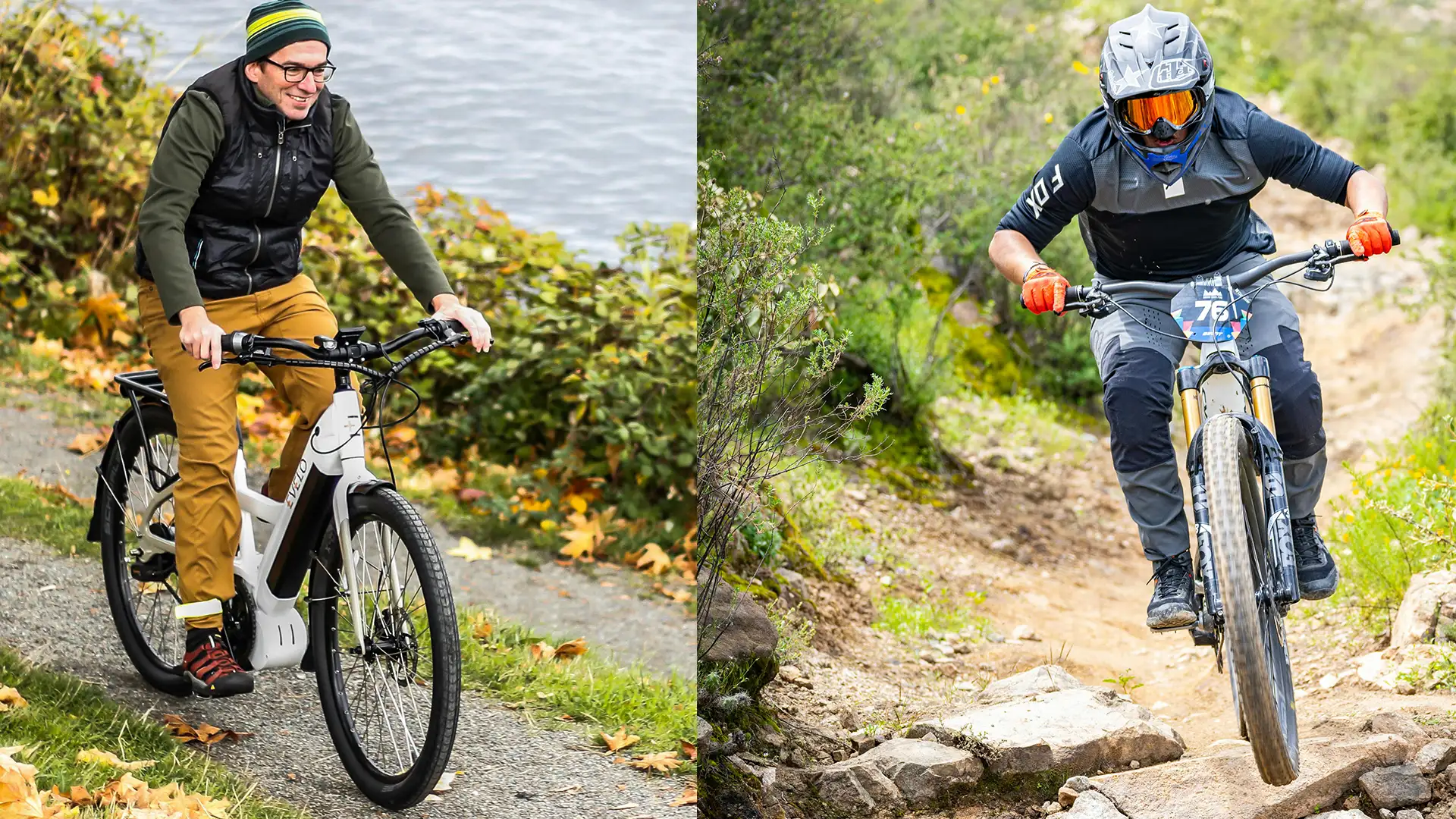
The long-running debate over the hardtail vs full suspension electric mountain bike ultimately comes down to your local terrain and what you prioritize: simplicity and efficiency, or control and comfort. The mechanical differences between a rigid rear end (hardtail) and a dual-suspension system (full suspension) fundamentally change the riding experience on any modern e-MTB.
The following outlines the distinctions between hardtail and full-suspension electric mountain bikes (e-MTBs).
Hardtail e-MTBs
- Best for smoother trails.
- More cost-effective and lighter.
- Requires less maintenance.
- Facilitates a direct transfer of power to the drivetrain.
Full-Suspension e-MTBs
- Best for rough terrain.
- Provides superior impact absorption.
- Offers enhanced traction and greater stability during descents.
- Prioritizes rider comfort and control.
Neither bike type is inherently better. The best choice depends on the specific terrain and individual riding style. Hardtails offer maximum value, while full-suspension designs typically maximize rider confidence.
Here is one of the list of our best pick on Electric Bikes Under 1000.
What Is a Hardtail Electric Mountain Bike?
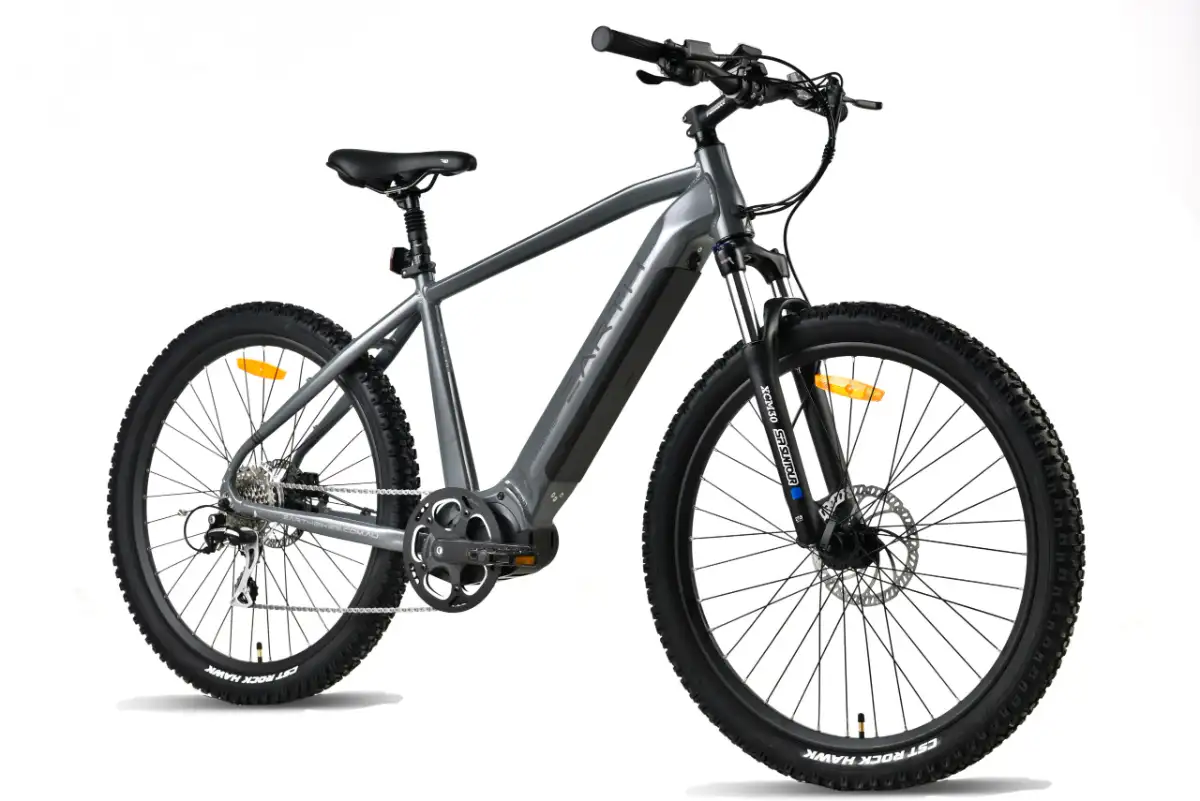
A hardtail electric mountain bike is defined by its fundamental structure: it has suspension only in the front fork, while the rear triangle remains completely rigid. This design simplicity eliminates the rear shock, pivot bearings, and complex linkage systems, making hardtails inherently lighter, less expensive, and far easier to maintain over the long term. Most models utilize a mid-drive motor positioned centrally for balanced handling.
The rigid rear structure ensures exceptionally efficient power transfer. Because there is no suspension to absorb pedaling force, energy goes straight to the drivetrain, resulting in a crisp, highly responsive feel on climbs and smooth trails.
When comparing the hardtail vs full suspension emtb, the trade-off for this simplicity is comfort on technical trails. The rigid rear end transmits more vibration and impact from roots and rocks directly to the rider, which can increase fatigue on longer, rougher rides. Hardtails are therefore best suited for cross-country (XC) riding, fire roads, and riders prioritizing simplicity and value.
Advantages of a Hardtail eMTB
- Lower price
- Lighter frame
- More efficient power transfer
- Easier maintenance
- Better battery efficiency on smooth terrain
Many riders searching for hardtail vs full suspension mtb discover that hardtails climb extremely well.
Because there is no rear shock absorbing pedaling force, energy goes straight to the drivetrain.
Disadvantages
- Less comfort on rough trails
- More vibration
- Harder on lower back
- Less forgiving on technical descents
Hardtails work best for:
- Cross-country riding
- Fire roads
- Light trail use
- Budget-focused buyers
Ready to narrow down your options? We’ve reviewed and ranked the top hardtail electric mountain bikes to help you choose with confidence.
What Is a Full Suspension Electric Mountain Bike?
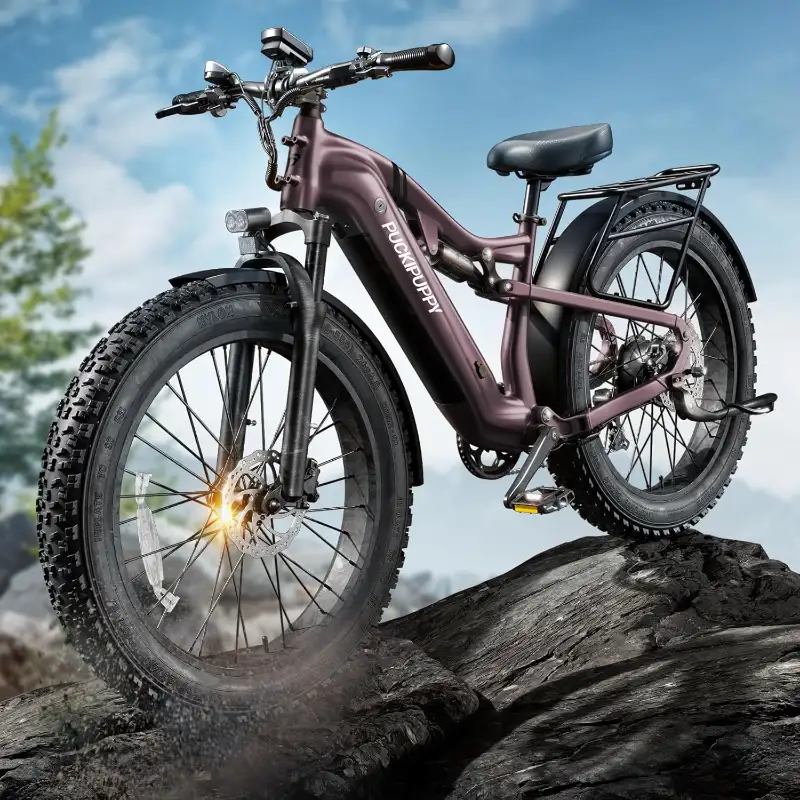
A full suspension electric mountain bike (or full-sus eMTB) is engineered for maximum capability by incorporating suspension at both the front and rear wheels. This involves a rear shock absorber and a complex pivot linkage system integrated into the frame, allowing both wheels to actively absorb impacts from the trail. This dual-suspension design fundamentally changes the riding experience, especially on aggressive terrain.
While the motor and battery systems are similar to those on hardtails—often featuring a mid-drive motor for balanced weight distribution—the rear suspension provides immediate, game-changing benefits:
- Superior Comfort and Control: The rear shock significantly increases comfort and reduces rider fatigue by smoothing out bumps, roots, and rocks.
- Enhanced Traction: By allowing the rear wheel to track the ground consistently, full suspension dramatically improves traction on loose or uneven surfaces.
Increased Confidence: When the terrain becomes technical, this consistent grip and superior impact absorption lead to greater stability and control, increasing confidence when descending at speed.
When riders compare a full suspension electric mountain bike vs hardtail vs full suspension emtb, they recognize the trade-off. Full-suspension models typically have a higher purchase price and involve more maintenance (due to periodic servicing of the rear shock and pivot bearings). They are also slightly heavier. However, the benefit is unparalleled control, reduced physical strain, and maximized performance on technical trails, making them the definitive choice for trail and enduro riders.
Advantages of Full Suspension eMTB
- Superior comfort
- Better traction
- More stable at speed
- Easier control on technical descents
- Reduced rider fatigue
When comparing full suspension vs hardtail, this is where full suspension shines.
On rocky terrain, it keeps both wheels planted.
Disadvantages
- Higher price
- Heavier frame
- More maintenance
- Slightly reduced pedaling efficiency
Ready to narrow down your options? We’ve reviewed and ranked the top full suspension electric mountain bikes to help you choose with confidence.
Hardtail vs Full Suspension Electric MTB: Side-by-Side Comparison
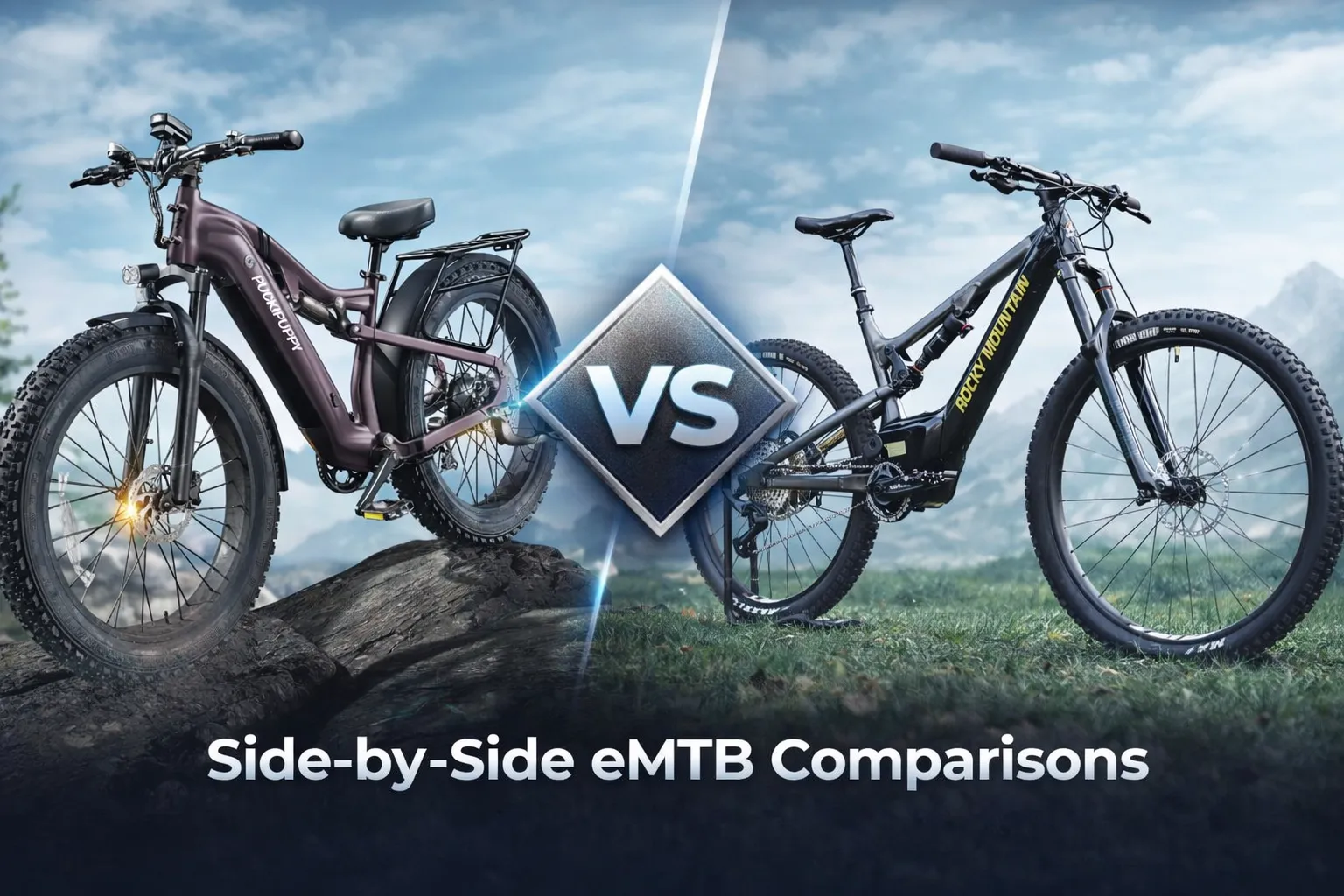
The choice between a hardtail vs full suspension electric mountain bike boils down to balancing budget, efficiency, and terrain capability. While both designs employ powerful motors, their performance on the trail is fundamentally different. This comparison helps riders identify whether the simplicity and efficiency of the best hardtail electric mountain bike or the control and comfort of a full suspension electric mountain bike best suits their needs.
Hardtails excel on smooth climbs with direct power transfer, while the full-suspension system provides superior traction and stability on loose, technical surfaces. Ultimately, the terrain you ride most often determines the winner in the hardtail vs full suspension emtb debate.
For a clear overview of the critical distinctions, consult the table below:
| Feature | Hardtail Electric MTB | Full Suspension Electric MTB |
|---|---|---|
| Price | Lower | Higher |
| Weight | Lighter | Heavier |
| Climbing Efficiency | Excellent | Very Good |
| Descending Control | Moderate | Excellent |
| Comfort | Basic | Superior |
| Maintenance | Low | Moderate–High |
| Battery Efficiency | Slightly better | Slightly lower |
| Best For | XC, light trails | Technical trails |
This side-by-side comparison clearly explains the core differences, highlighting that full-suspension models maximize control and comfort, while hardtails deliver maximum value and maintenance simplicity.
Climbing Performance: Which Is Better?
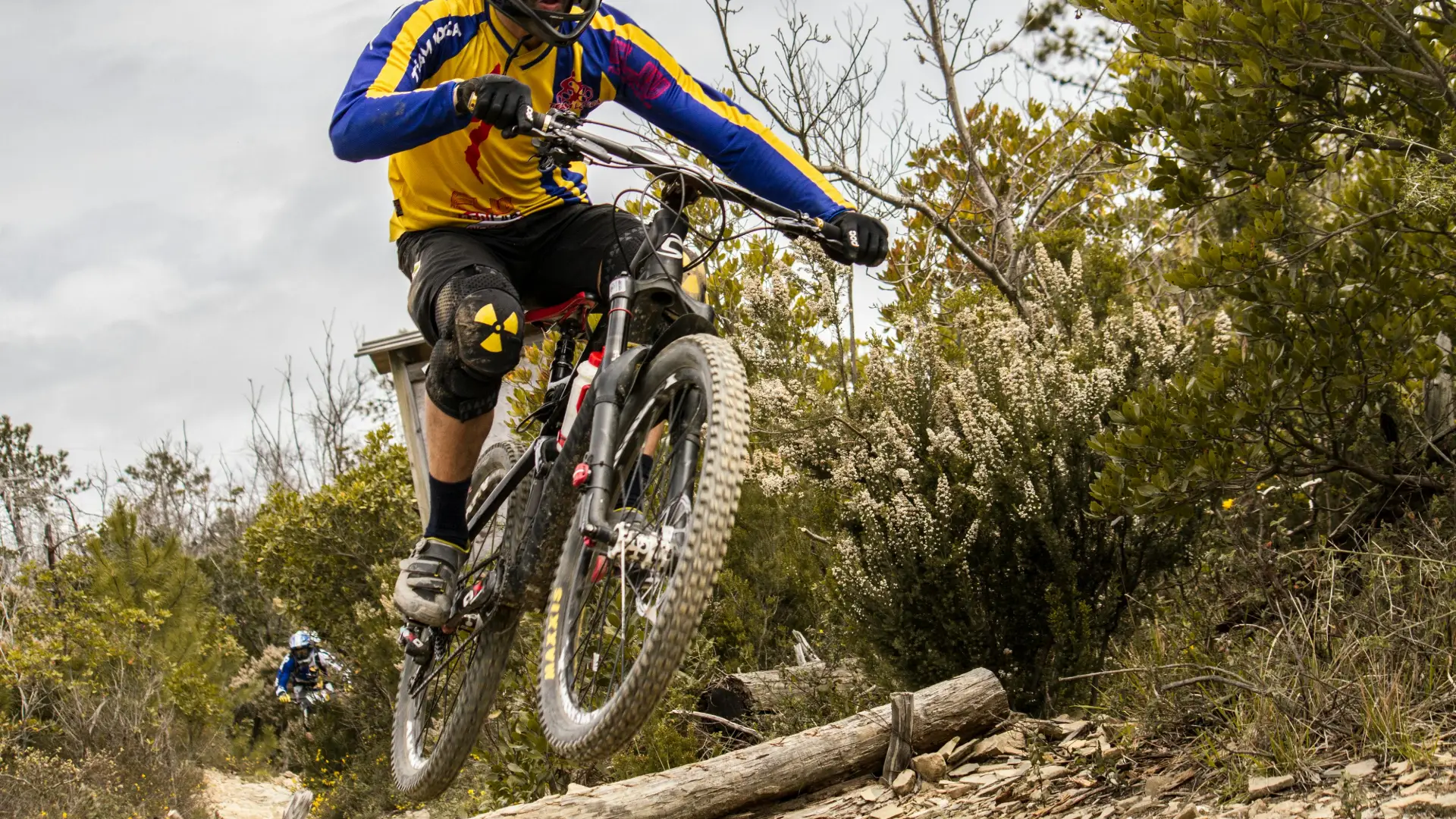
Climbing performance is a key factor in the hardtail vs full suspension electric mountain bike debate. The answer depends entirely on the type of trail you are tackling.
Hardtail eMTB:
Hardtails traditionally excel on climbs due to their mechanical simplicity and efficient power delivery.
- Direct Power Transfer: With a rigid rear end, the hardtail transfers pedaling power directly to the wheel, which maximizes efficiency on smooth climbs and fire roads.
- Weight Advantage: Hardtails are typically lighter, a small but helpful advantage on long ascents.
Full Suspension eMTB:
The addition of an electric motor fundamentally changes the climbing equation, making the efficiency difference less significant.
- Traction is King on Technical Climbs: On technical, rocky, or loose ascents, traction is more critical than raw pedaling efficiency. The full-suspension system allows the rear tire to stay consistently planted on the ground, preventing wheel slip and improving control and momentum.
- Motor Compensation: Mid-drive motors reduce the pedaling strain, which significantly shrinks the gap in efficiency between the two designs.
When evaluating hardtail vs full suspension emtb, the terrain is the deciding factor. Hardtail electric mountain bike efficiency is superior on smooth trails, while the full suspension electric mountain bike traction advantage wins out on rough, technical climbs.
Descending and Technical Trails
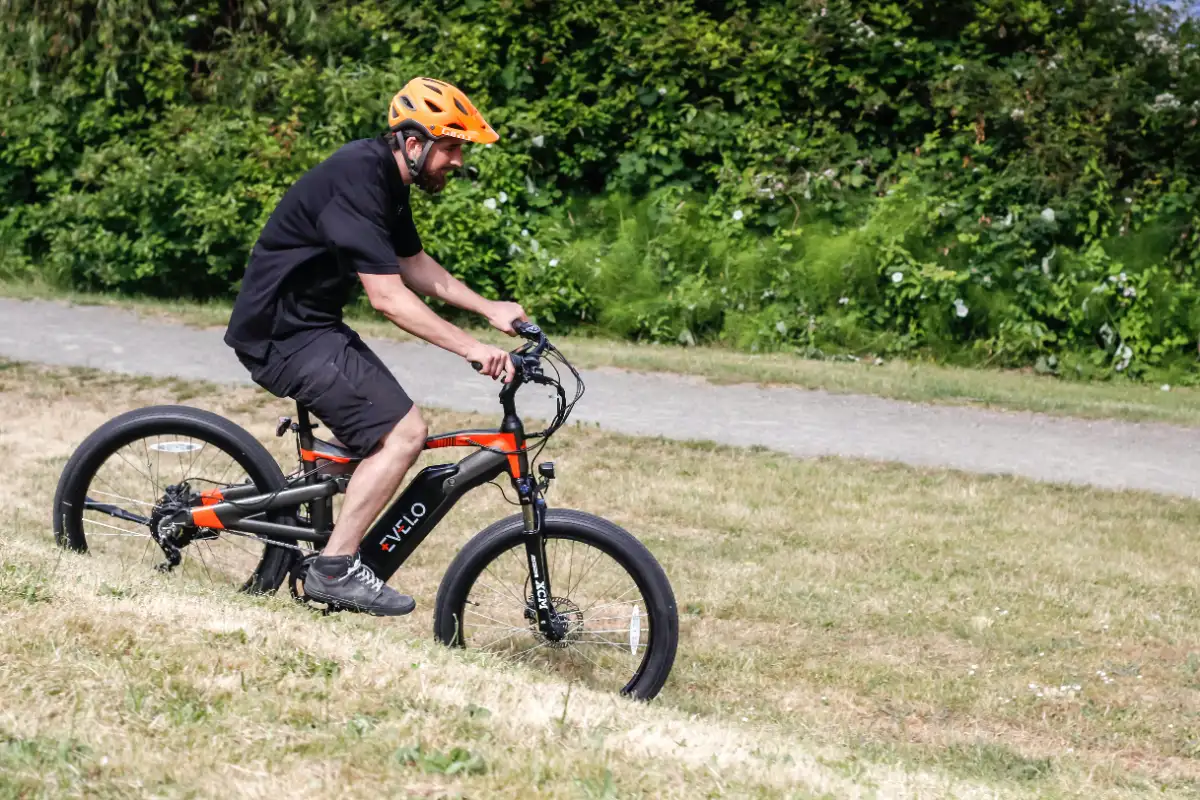
The experience on descents creates the largest, most decisive difference in the hardtail vs full suspension electric mountain bike comparison.Full Suspension eMTB: Maximum Control
A full suspension electric mountain bike is purpose-built to handle aggressive descents and technical terrain.
- Impact Absorption: The system absorbs impacts from both the front and rear wheels simultaneously. This allows the bike to remain composed and stable even at high speeds and over rough sections.
- Superior Traction: Rear suspension actively improves downhill traction by keeping the tires consistently pressed against the ground. This consistent ground contact dramatically enhances control, especially when braking on loose surfaces.
- Confidence Boost: This level of control encourages more aggressive riding and allows riders to maintain momentum over difficult features like rock gardens. For riders focusing on Enduro eMTB, full suspension is essential.
Hardtail eMTB: Precision and Feedback
The hardtail electric mountain bike offers a more responsive, direct connection to the trail but demands a higher degree of rider skill.
- Direct Feel: Hardtails transmit clear feedback about the trail surface, which some riders prefer for a more engaged and responsive feel.
- Increased Fatigue: The rigid rear end means the rider’s body (arms and lower back) absorbs significantly more vibration and impact on rough terrain. Fatigue builds quickly on extended or technical descents.
- Line Choice: When comparing the full suspension bike vs hardtail, the hardtail rewards precise, smoother line selection to mitigate impacts, whereas full suspension is more forgiving of mistakes.
The decisive factor in this section is the terrain: if your local trails are flowing and smooth, a hardtail performs well. If they are dominated by rock gardens and high-speed roughness, a full suspension system is necessary for safety, control, and enjoyment.
Comfort and Long Ride Fatigue
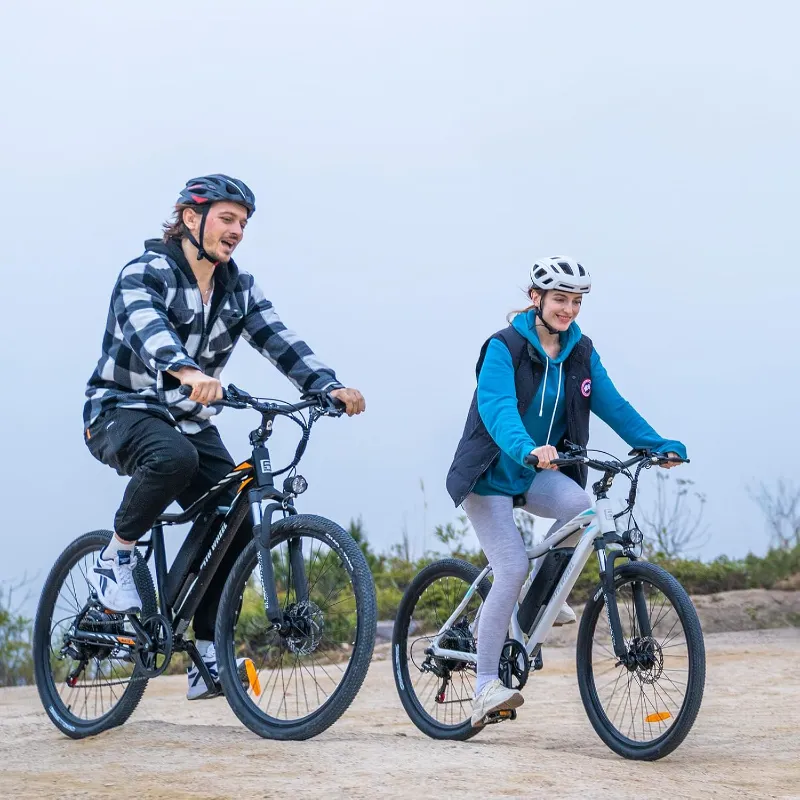
When considering a hardtail vs full suspension electric mountain bike, comfort becomes a critical factor on longer rides, especially since all electric mountain bikes are inherently heavier than their non-electric counterparts. This added weight increases the stress and impact felt on rough terrain.
The two designs handle rider fatigue differently:
- Full Suspension Electric Mountain Bike: This design delivers superior comfort. The rear shock absorbs impact from both wheels, significantly reducing cumulative vibration and shock transmitted to the rider’s body. This smooths out the ride immediately, reducing strain on the arms and lower back, allowing riders to maintain energy and focus for a longer duration. In endurance scenarios on technical trails, reduced fatigue directly translates to better control and performance.
- Hardtail Electric Mountain Bike: The rigid rear triangle on a hardtail electric mountain bike transmits more direct feedback and vibration. Small bumps feel sharper over time, and lower back fatigue builds faster, becoming particularly noticeable on rides lasting two hours or more. Hardtails require the rider to use more careful line selection and technique to absorb impacts, which can be physically more demanding.
The gap in comfort is most pronounced on rough, technical terrain where rock gardens amplify rear wheel impact. While comfort differences shrink on flowing trails, if you plan on long-distance riding over rough surfaces, the full suspension setup provides a less demanding experience.
Battery Efficiency: Does Suspension Matter?
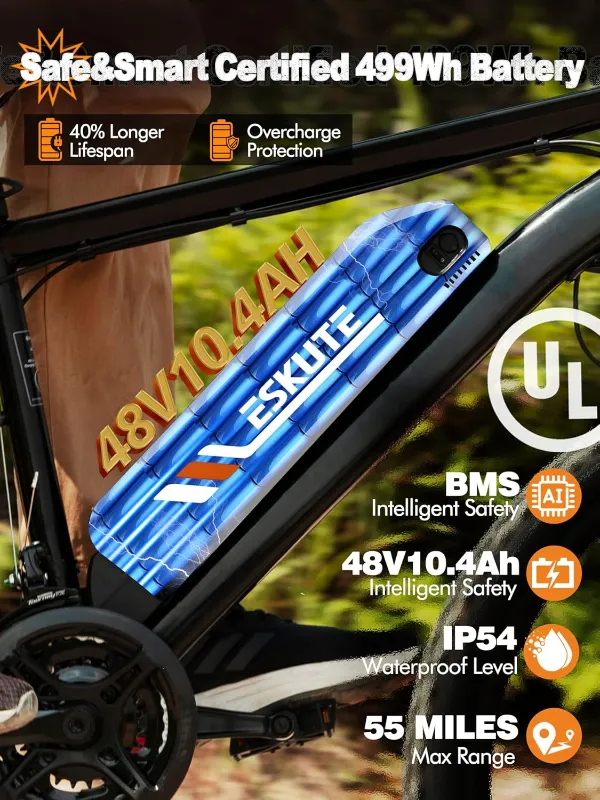
When evaluating hardtail vs full suspension electric mountain bike, many riders worry that the weight and movement of a full-suspension system will significantly drain their battery faster. However, the real-world difference in battery efficiency is often minimal, especially with modern e-MTB designs.
Here is a breakdown of how suspension design impacts range:
- Hardtail Advantages (Marginal Efficiency): The hardtail electric mountain bike benefits from two minor efficiency gains. First, it is generally lighter, which slightly reduces the motor’s workload. Second, the direct, rigid rear triangle ensures highly efficient power transfer with less energy lost to suspension movement.
- Full Suspension Compensations (Traction Gain): While slightly heavier, a full suspension electric mountain bike offers a critical efficiency benefit on loose or technical terrain: enhanced traction. Improved traction reduces wheel slip, which prevents the motor from spinning needlessly and conserves energy.
- The Overriding Factor: Terrain: Ultimately, the environment and your riding style impact range far more than the type of suspension. Steep climbs and aggressive use of the assist modes drain the battery much faster than the marginal efficiency differences between the frames.
When comparing full suspension vs hardtail, the range difference is negligible for most riders on mixed terrain. If maximum distance is your primary concern, focus on securing a larger battery capacity—that decision will yield a far greater real-world range than your choice of suspension.
Maintenance and Long-Term Cost
For new riders, the decision regarding a hardtail vs full suspension electric mountain bike boils down to balancing budget against immediate stability. Both designs can successfully launch a mountain biking journey, but one offers a greater margin of error.
A full suspension electric mountain bike provides superior control and is more forgiving, making it highly beneficial for beginners on rough trails. By keeping the wheels consistently planted, full suspension dramatically improves traction and stability on descents, allowing new riders to build confidence faster while reducing the harsh physical impacts of technical riding.
However, budget is often the definitive factor. Entry-level full suspension models demand a higher price, which can lead to compromises on crucial component quality (like reliable brakes and drivetrains). For a constrained budget, choosing a high-quality hardtail electric mountain bike is often the wiser choice. Hardtails are mechanically simpler, more robust, and naturally encourage the development of better technique and precise line choice—skills that are foundational to all mountain biking.
Ultimately, if your budget allows for a quality full suspension electric mountain bike, it offers maximum comfort and confidence right away. If your budget is limited, invest in a quality hardtail to ensure reliable, safe components that reward developing skill.
Hardtail vs Full Suspension Under $3000
Budget significantly shifts the dynamics of the hardtail vs full suspension electric mountain bike debate. When purchasing under $3,000, value and component reliability must take priority over suspension type.
The hardtail electric mountain bike clearly dominates this price bracket. Because the frame avoids the cost of a rear shock and complex linkage, manufacturers are able to allocate funds to crucial components. This often results in a budget hardtail electric mountain bike offering:
- Higher quality drivetrains and hydraulic disc brakes.
- More powerful mid-drive motors and larger battery capacities.
- A more reliable front suspension fork.
In contrast, a full suspension electric mountain bike under $3,000 frequently compromises on component quality to cover the increased frame cost. The resulting low-tier rear shocks typically offer minimal performance benefits and can require earlier replacement.
For maximum performance and reliability per dollar, the hardtail is the smarter choice for this price range. If you intend to ride highly technical terrain, it is often better to save for a higher-tier full-suspension model where the component quality justifies the investment.
For a comprehensive guide to the best e-bikes across all budgets, review our selections for the Best Mountain E-Bikes.
Which Is Better for Beginners?
The true financial impact of choosing a hardtail vs full suspension electric mountain bike is found in the long-term cost of ownership, not just the initial sticker price. The suspension design is the major differentiator here, affecting both the complexity and frequency of necessary servicing.
A hardtail electric mountain bike is the clear winner for low maintenance. Its rigid rear triangle eliminates several expensive and high-wear components, including the rear shock, pivot bearings, and linkage systems. This mechanical simplicity translates directly into longer service intervals and significantly lower long-term costs, making the hardtail electric mountain bike the best choice for budget-focused riders who prefer low-fuss ownership.
In contrast, the complex mechanics of a full suspension electric mountain bike require higher, routine maintenance. To maintain optimal performance and safety, these bikes require periodic servicing of the rear shock and the inspection and occasional replacement of pivot bearings that wear down over time. While both bike types share identical electric component servicing needs, the extra complexity of the full suspension electric mountain bike frame means ownership costs will be higher over the course of several years.
Rider Type Breakdown: Hardtail vs Full Suspension
The definitive answer in the hardtail vs full suspension emtb debate is determined by your specific riding style and primary goals. Matching the bike’s design to your intended use ensures maximum enjoyment and performance.
- Cross-Country (XC) Riders: These riders prioritize climbing efficiency and lighter weight. The hardtail electric mountain bike offers highly efficient, direct power transfer, making it the ideal choice for flow trails, fire roads, and maximizing speed on less technical terrain.
- Trail and Enduro Riders: If your rides involve mixed, technical trails or aggressive downhill runs, a full suspension electric mountain bike is necessary. The dual suspension maximizes stability and increases traction over roots and rocks, reducing fatigue and enabling faster, more confident descending—crucial for those interested in enduro emtb.
- Budget-Conscious Buyers: When maximizing value is the goal, the hardtail is superior. It delivers better overall component quality per dollar compared to a budget full-suspension model, ensuring a reliable riding experience.
- Riders Seeking Maximum Comfort: For long rides, especially over rough ground, the added stability and impact absorption of a full-suspension system reduce the harsh stress transferred to the rider’s body, significantly enhancing comfort and control.
Ultimately, the choice between a hardtail vs full suspension electric mountain bike is an alignment of your goals—efficiency and simplicity, or control and forgiveness.
Common Myths About Hardtail vs Full Suspension
Modern engineering, especially in the world of electric mountain bikes, has rendered many traditional suspension arguments obsolete. When comparing the hardtail vs full suspension electric mountain bike, it’s crucial to discard these common myths to make an informed decision:
Myth 1: Hardtails Are Only for Beginners
This is incorrect. While budget-friendly hardtail electric mountain bike models are excellent for new riders, many experienced trail veterans and professional cross-country racers actively choose hardtails. They are valued for their simplicity, maintenance ease, and highly efficient power transfer on smoother courses. Hardtails demand and reward a more refined, skillful riding technique than their full-suspension counterparts.
Myth 2: Full Suspension Always Wastes Pedaling Power
Outdated suspension designs did lead to significant energy loss (or ‘bobbing’). However, modern full suspension electric mountain bike designs use sophisticated kinematics and shock lockout features that effectively minimize energy waste on climbs. Furthermore, the electric motor compensates for any minor efficiency gap, while the superior traction gained by the rear shock helps maintain momentum and conserve energy on technical, loose ascents.
Myth 3: Electric Motors Remove the Need for Suspension
This ignores the physics of eMTBs. The motor and battery add considerable weight to the bike. This extra mass increases the force of impacts on the trail, making suspension even more critical for stability and comfort. Suspension is necessary to maintain control under heavier loads and absorb the harshness that the electric assistance does not eliminate.
Myth 4: Hardtails Cannot Handle Technical Terrain
A hardtail electric mountain bike is capable of handling rough trails, but it requires a significantly higher level of rider skill and precise line choice. Full suspension offers a massive benefit in forgiveness, allowing the rider to maintain confidence over technical sections with less physical effort. When evaluating a hardtail vs full suspension emtb, the hardtail demands precision, whereas full suspension provides enhanced control and safety.
Final Verdict: Which Should You Choose?
There is no universal winner in the hardtail vs full suspension debate. Your terrain and riding priorities will ultimately determine the best choice.Choose a Hardtail Electric Mountain Bike if you:
- Ride primarily on smoother trails, fire roads, or cross-country (XC) routes.
- Are seeking maximum value and budget control.
- Prioritize a lighter frame and simpler, lower-cost maintenance.
Choose a Full Suspension Electric Mountain Bike if you:
- Regularly ride on rocky, technical, or aggressive terrain.
- Value comfort and stability on long, demanding rides.
- Need maximum traction and forgiveness when descending aggressively.
If your budget is under $3,000, a high-quality hardtail electric mountain bike is the better investment for reliable components. If technical terrain dominates your rides, a full suspension electric mountain bike will deliver the control and safety benefits that justify the higher cost.
To see our top-rated options for every riding style and budget, check out our guide on the Best Mountain E-Bikes.
Frequently Asked Questions About Hardtail vs Full Suspension Electric Mountain Bikes
Is hardtail or full suspension better for electric mountain bikes?
The answer depends on terrain and riding style.
- Hardtail electric mountain bikes suit smoother trails.
- Full suspension electric mountain bikes handle rough terrain better.
When comparing hardtail vs full suspension mtb, comfort differs most.
- Full suspension improves traction and downhill control.
- Hardtails offer lower cost and lighter weight.
Is a hardtail faster than a full suspension electric MTB?
On smooth climbs, hardtails often feel faster.
- Power transfer is more direct.
- There is no rear suspension movement.
On rocky terrain, full suspension maintains better momentum.
- Traction reduces wheel slip.
- This can improve real-world speed.
Does full suspension waste battery power?
Battery differences are usually small.
- Hardtails are slightly lighter.
- Weight can improve efficiency marginally.
However, full suspension improves traction on loose terrain.
- Better traction reduces energy loss from wheel spin.
- Terrain affects battery range more than suspension type.
Which is better for beginners: hardtail or full suspension?
Beginners benefit from stability and comfort.
- Full suspension increases confidence on rough trails.
- Mistakes feel less harsh.
If budget is limited, choose a quality hardtail.
- Component quality matters more than suspension type.
Is full suspension worth the extra money?
For technical riders, yes.
- Comfort and control improve significantly.
- Long descents feel more stable.
For light trail use, hardtail offers better value.
- Budget should guide your decision.
Do hardtails climb better than full suspension bikes?
On smooth fire roads, yes.
- Hardtails transfer power directly.
On rocky climbs, full suspension improves traction.
- Rear suspension keeps the tire planted.
- Motor assistance reduces efficiency differences.
Is a hardtail electric mountain bike good for rough trails?
It can handle moderate rough terrain.
- However, rider skill must compensate.
- Vibration increases over longer rides.
Full suspension reduces fatigue significantly.
- Comfort improves on technical trails.
Are full suspension electric mountain bikes heavier?
Yes, slightly heavier.
- Rear shocks add frame complexity.
- Linkage systems increase weight.
- Rear shocks add frame complexity.
Modern designs reduce that difference.
- Weight gaps are smaller than before.
Which is better for long-distance riding?
Comfort becomes important over distance.
- Full suspension reduces cumulative vibration.
- Fatigue builds slower on rough terrain.
- Full suspension reduces cumulative vibration.
Hardtails perform well on smooth long rides.
- Terrain should guide your choice.
Is hardtail cheaper than full suspension?
Yes, usually.
- Hardtails require fewer components.
- Manufacturing costs are lower.
- Hardtails require fewer components.
Under $3000, hardtail offers better value.
- Full suspension quality improves at higher budgets.
What lasts longer: hardtail or full suspension?
Hardtails have fewer moving parts.
- Maintenance is generally simpler.
- Long-term servicing costs are lower.
- Maintenance is generally simpler.
Full suspension requires pivot bearing checks.
- Shock servicing is necessary periodically.
Should I choose hardtail or full suspension for trail riding?
Trail riding varies widely.
- Smooth trails favor hardtail efficiency.
- Technical trails favor full suspension control.
When comparing mountain bike hardtail vs full suspension, terrain decides everything.